Stop vulnerable code before it reaches production.
Security integrated into the CI/CD pipeline through automated gates, SAST, SCA, container scanning, secrets management, and developer training. Aligned with OWASP and NIST SP 800-218. Designed to reduce risk without slowing deployment velocity.
Security that lives inside the pipeline.
Most organizations test application security after the fact. Pen tests run against production. Vulnerability scans surface findings the development team has to retrofit weeks or months after the offending code was merged. The cost of fixing a vulnerability after release is dramatically higher than the cost of catching it at commit, and the gap between deployment velocity and security posture keeps widening as teams ship faster.
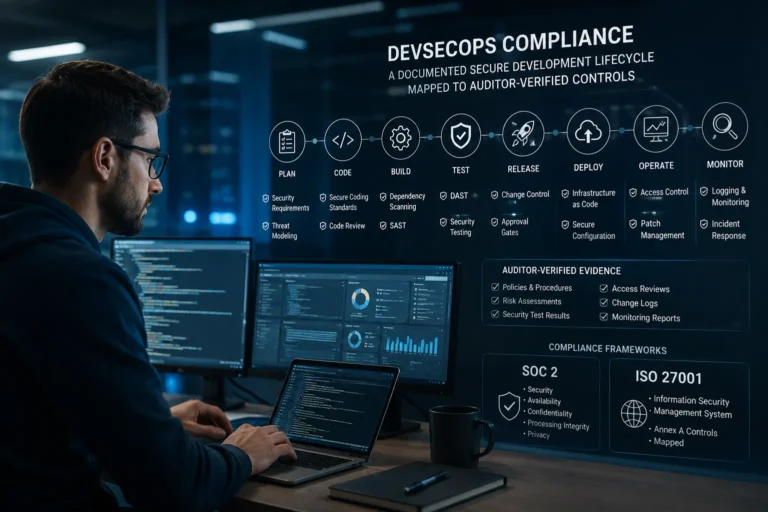
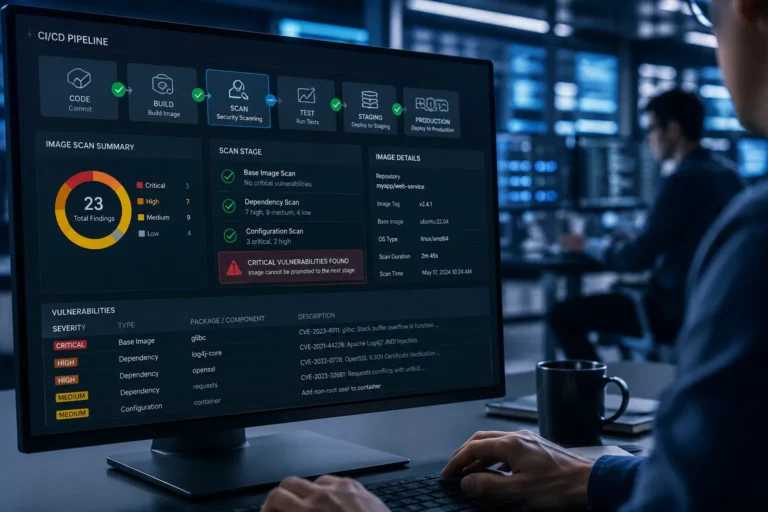
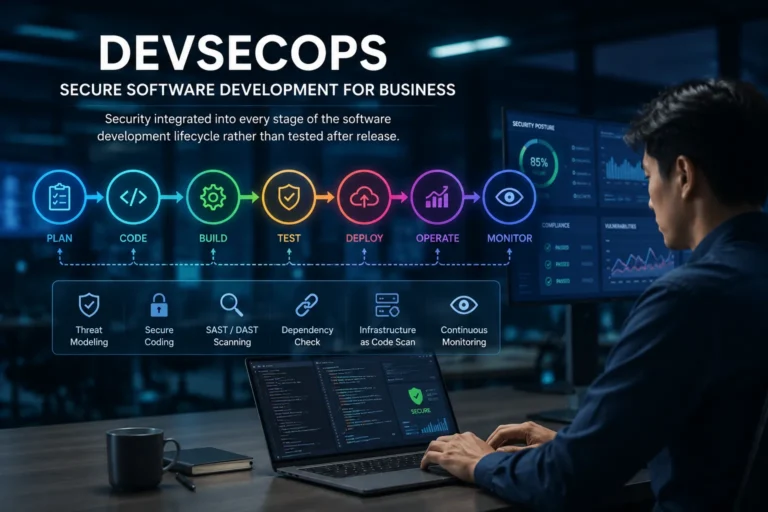
Armour Cybersecurity's DevSecOps engagement collapses that gap. Security practices and automated tooling are integrated directly into the software development lifecycle. CI/CD pipelines gain security gates that catch issues before they merge. SAST analyzes code, SCA tracks third-party dependencies, container scanning inspects images before deployment, and secrets detection prevents credentials from landing in repositories. Developers receive secure coding training and a metrics dashboard tracks pipeline security posture for both engineering and executive audiences.
The methodology is informed by OWASP, NIST SP 800-218, and DevSecOps industry best practices. The engagement is technology-agnostic, so tool selection follows the organization's stack, languages, deployment targets, and existing investments rather than a vendor relationship. The deliverable is a working program, not a slide deck.
Security as a checkpoint vs. security as a build step.
The difference between organizations that ship secure software at velocity and those that ship vulnerabilities at velocity usually comes down to whether security lives outside the pipeline or inside it.
Vulnerabilities found weeks after the commit that caused them.
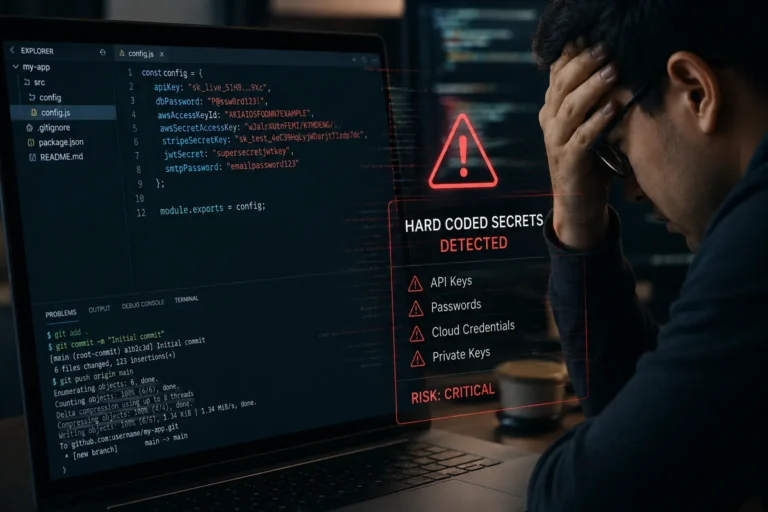
Security testing happens at the end of the lifecycle, if at all. Pen tests find issues that should have been caught at code review. Hardcoded credentials sit in repositories. Outdated libraries with known CVEs ship to production. Containers run with vulnerable base images. Developers learn about findings in tickets weeks after the merge, with no context, no tooling support, and no training in how to prevent the next one. Deployment velocity and security posture pull in opposite directions.
Findings surface at commit, not in a quarterly pen test.
SAST runs on every pull request. Dependency scanning flags vulnerable libraries before merge. Container images are scanned in the registry. Secrets detection blocks credentials from being committed. Developers receive secure coding training and tooling support so findings are fixable in minutes, not days. The security metrics dashboard makes posture visible to engineering and executives in the same view. Velocity and security improve together, because the cost of catching issues early is a fraction of the cost of fixing them late.
What the engagement covers.
Nine integrated domains across code, dependencies, containers, infrastructure, secrets, and developer practice. Every domain is mapped to the chosen framework and reflected in the pipeline configuration and metrics dashboard.
DevSecOps Strategy & Assessment
Documentation of current development and deployment processes, security maturity assessment of existing practices, identification of tooling gaps, and definition of a DevSecOps roadmap aligned with engineering priorities.
Static Application Security Testing
Selection and integration of SAST tools into the CI/CD pipeline. Code analyzed on every pull request, with security gate thresholds tuned to maintain velocity while surfacing the issues that matter.
Software Composition Analysis
Automated scanning of open-source and third-party dependencies for known vulnerabilities, license issues, and outdated components. Findings tracked from merge through production with remediation guidance for developers.
Dynamic Application Security Testing
Integration of DAST tooling to test running applications from an external perspective, catching runtime issues that static analysis cannot see, with results fed back into the same dashboard as SAST and SCA findings.
Container & Image Security
Container image scanning in the registry, base image hardening, container registry access controls, and runtime policies that prevent vulnerable or misconfigured images from being deployed to production.
Infrastructure as Code Scanning
Scanning of Terraform, CloudFormation, Kubernetes manifests, and other infrastructure-as-code artifacts for misconfigurations and policy violations before they provision cloud resources or update environments.
Secrets Management & Detection
Centralized secrets management implementation, rotation policy, repository scanning to detect hardcoded credentials, and remediation of exposed secrets found during the initial SDLC assessment.
Secure Development Practices
Secure code review process, secure coding standards, dependency management best practices, and threat modeling for critical applications, established as engineering norms rather than security overhead.
Developer Training & Governance
Hands-on secure coding training (up to three sessions), security policies for the development workflow, runbooks for security incident response in code, and quality and security metrics that hold the program accountable.
Who this engagement serves.
Built for organizations that ship software and need to embed security into engineering practice rather than bolt it on after release.
Software & SaaS Companies
Product teams shipping applications to customers who need to demonstrate secure development practice to enterprise buyers, auditors, and security questionnaires without slowing release velocity.
Regulated Industries with In-House Development
Finance, healthcare, legal, and government organizations whose internal development teams build systems subject to SOC 2, ISO 27001, HIPAA, PCI DSS, or sector-specific obligations covering secure development.
Cloud-Native & Container Workloads
Organizations running Kubernetes, container registries, and infrastructure-as-code at scale, where misconfigurations and vulnerable images can propagate across environments before anyone notices.
Engineering Leaders Building the Program
CTOs, VPs of Engineering, and Application Security leaders building a DevSecOps practice from scratch, refactoring an existing one, or preparing for an audit that requires documented secure SDLC controls.
A disciplined methodology across six phases.
The engagement runs twelve weeks across six structured phases. Assessment completes in week two, tool integration by week five, training by week eight, and optimization by week twelve. Each phase has defined inputs, outputs, and acceptance criteria.
Strategy & SDLC Assessment
Documentation of the current development and deployment process. Maturity assessment against OWASP and NIST SP 800-218. Identification of tooling gaps, integration opportunities, and the DevSecOps roadmap.
Security Tooling Integration
Selection and integration of SAST, SCA, and DAST tooling into the CI/CD pipeline. Initial baseline scans across repositories, with finding triage and tuning to suppress noise before gates are enforced.
Container & Infrastructure Security
Container image scanning deployment, registry access controls, infrastructure-as-code scanning for misconfigurations, and secret detection across code repositories with rotation of exposed credentials.
Secure Development Practices
Establishment of secure code review process, secure coding standards, dependency management practices, and a threat modeling process for critical applications, integrated into engineering rituals.
Secrets Management & Credentials
Implementation of centralized secrets management, rotation of any secrets exposed in repositories, establishment of a rotation policy, and audit of secret access and usage across the environment.
Training, Metrics & Governance
Hands-on secure coding training for developers, security policies for the development workflow, runbooks for code-related security incidents, and rollout of the security metrics dashboard.
What the organization walks away with.
Nine integrated deliverables that together form a working DevSecOps program. Every artifact is built to survive audit, equip engineering, and feed continuous improvement after the engagement ends.
DevSecOps Program Design
Secure SDLC integration strategy documenting the target operating model, tooling architecture, governance structure, and the roadmap from current state to mature program.
Secure SDLC Process Documentation
Updated development process documentation with security gates defined at each stage, ready to be referenced in audit evidence and engineering onboarding.
CI/CD Security Tool Configurations
Working configurations for SAST, SCA, DAST, container scanning, and secret detection, integrated into the pipeline with tuned thresholds and documented runbooks.
Developer Training Materials
Secure coding guides, tooling reference materials, and up to three hands-on training sessions tailored to the organization's stack, languages, and the most common vulnerability classes in the codebase.
Security Metrics Dashboard
Pipeline security posture dashboard tracking SAST findings, SCA vulnerabilities, container scan results, secret detection events, mean time to remediate, and trends by team and repository.
SDLC Maturity Assessment Report
Findings report covering current-state maturity scoring, identified gaps with severity ratings, business impact, and prioritized remediation guidance in the style of the sample DevSecOps assessment deliverable.
Secure Code Review Standards
Documented code review checklist, secure coding standards mapped to the OWASP Top 10 and the organization's primary languages, and review process integration into the existing pull request workflow.
Threat Modeling Process
Lightweight threat modeling process for critical applications, with templates, facilitator guidance, and integration points into the design and architecture review stage of the SDLC.
Secrets Management Implementation Plan
Plan for centralized secrets management, secret rotation policy, repository remediation steps for any exposed credentials found during assessment, and audit procedures for ongoing secret access.
The numbers behind the work.
Founded by military intelligence veterans with senior advisors from PwC, KPMG, Deloitte, EY, and Mandiant. The track record reflects the discipline.
Clients Served
Organizations across finance, healthcare, technology, energy, legal, and government trust Armour Cybersecurity to protect what matters.
Client Retention Rate
Long-term engagements built on consistent quality, predictable delivery, and consulting relationships that compound in value over time.
Industries ยท Worldwide Reach
Cross-sector experience spanning every major regulated industry, with operations supporting clients across North America, Latin America, and beyond.
Cybersecurity Technology Solutions
A vetted catalogue of technology partnerships and proprietary methods deployed in support of secure SDLC implementation and CI/CD security engineering.
Build security into the pipeline, not on top of it.
Schedule a fifteen-minute discovery call to scope the engagement. Protecting What Matters starts at the pull request, not the pen test.
Book Discovery CallFrequently asked questions.
Common questions from engineering leaders, application security teams, and compliance owners evaluating a DevSecOps engagement.
How is DevSecOps different from application penetration testing?
Which frameworks and standards inform the methodology?
How long does a DevSecOps engagement take?
Do you remediate vulnerabilities in our code, or only find them?
Will security gates slow our deployment velocity?
Does the engagement include tool licensing?
What does the security metrics dashboard track?
Integrate security into the way you ship.
Reach out to scope a DevSecOps engagement. Discovery calls are scheduled within two business days.
Talk to Armour Cybersecurity.
Toronto, ON, Canada
Request a discovery call.
Tell us about your stack, CI/CD platform, and engineering priorities. A senior advisor will respond within two business days.