Insider Threats and Digital Forensics: What Businesses Need to Know
Aug 10, 2026
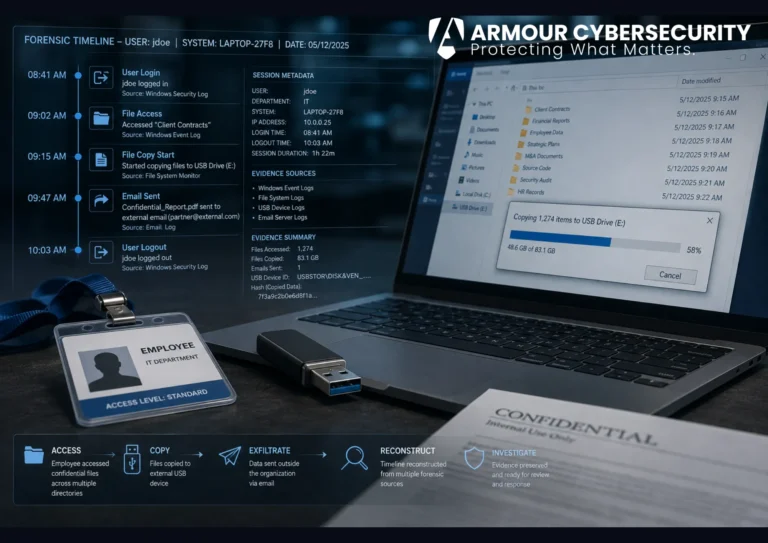
The insider already had access, so proving what they took means separating authorized work from theft in the same logs. Here is...


Digital forensic investigation across live systems, static media, network devices, cloud, mobile, and memory. Evidence preserved to criminal standards with documented chain of custody. Framework-agnostic methodology informed by leading digital evidence standards. Senior investigators, peer-reviewed analysis, and reports structured for legal, regulatory, and insurance use.
Digital forensics is the discipline of recovering, preserving, and investigating evidence from digital systems related to a security incident, insider event, or other matter that may require formal investigation. The work has been a recognized branch of forensic science since the early 1990s, and the standards that govern it (including ISO 27037 through 27043, ACPO guidelines, and evidentiary chain of custody requirements) exist because the consequences of getting it wrong are real: evidence excluded from legal proceedings, claims denied by insurance carriers, regulatory findings overturned on procedural grounds.
Armour Cybersecurity's Technical Forensics service is built around those standards. The team conducts forensic data collection across all major device types (live servers, desktops, and laptops with memory capture; cloud platforms; network devices including switches and routers; static computers and hard drives; mobile phones and smart devices). Investigation methodology spans the eight standard phases: first response, search and seizure, evidence collection, evidence preservation, data acquisition, data analysis, evidence assessment, and documentation and reporting. Every action is documented contemporaneously, every case is peer-reviewed, and every finding is delivered to evidential rigor sufficient for criminal proceedings.
Investigations are led by experienced senior consultants. Specialties include Microsoft, Linux, and Apple operating systems; memory analysis; file system analysis; mobile and smart device analysis; and data recovery. Many of the team have experience executing or being present at the execution of both criminal and civil warrants, and understand the practical realities of evidence handling beyond the textbook procedure. The result is forensic work that does what forensic work is supposed to do: answer the hard questions with evidence that holds up.
The difference between forensic work that delivers answers and forensic work that compromises the case usually comes down to whether the team had the discipline, the experience, and the methodology to handle the evidence correctly from the first action.
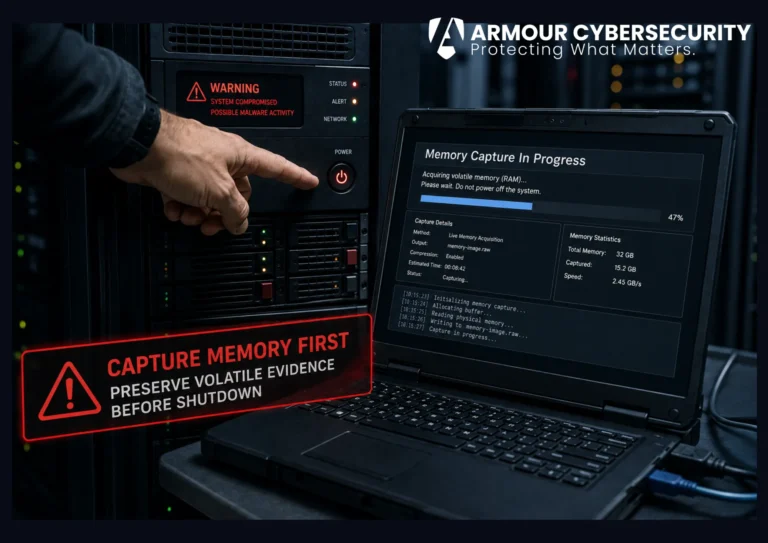
Internal IT shuts down the affected system before evidence is captured. Memory is gone. The attacker's tools left no trace on disk. Disk imaging is done without write-blockers. Chain of custody is not documented. The system administrator who first noticed the activity logged in to investigate, contaminating the evidence. The forensic report shows what the investigation found, but cannot establish how the evidence was preserved between event and analysis. The carrier rejects the claim. Counsel cannot use the findings in litigation. The investigation does not deliver the answers the organization needed.
First response captures volatile evidence before it is lost. Acquisition is performed using forensically sound techniques with documented chain of custody. Memory, disk, network, cloud, and mobile evidence are collected with methods appropriate to each medium. Analysis is conducted in a controlled forensic environment. Every action is documented contemporaneously, and the investigation is peer-reviewed before the final report is delivered. The findings answer the hard questions with evidence that holds up to scrutiny from courts, regulators, carriers, and counsel.
Nine integrated forensic capabilities across the investigation lifecycle. Each draws on the team's expertise in operating systems, memory analysis, file system analysis, mobile and smart device analysis, and data recovery.
Action taken immediately after the occurrence of a security incident, tailored to the nature of the event. Preservation of volatile evidence before it is lost. Identification of the systems and data in scope.
Forensic data collection from servers, desktops, and laptops while running, including memory capture to preserve volatile evidence (running processes, network connections, encryption keys, malware artifacts in memory).
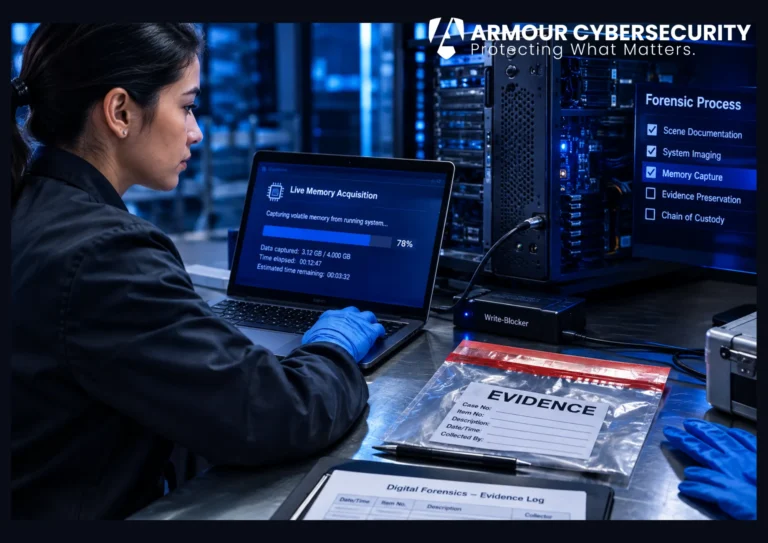
Forensic acquisition of computers, hard drives, and storage media using forensically sound techniques with write-blockers, hash verification, and full chain-of-custody documentation.
Forensic acquisition and analysis across major cloud platforms. Recovery of cloud audit logs, identity events, configuration history, and data access records appropriate to the platform and the investigation.
Acquisition and analysis of network device data including switches, routers, firewall logs, and traffic data, supporting reconstruction of network-level attack progression and lateral movement.
Forensic acquisition and analysis of mobile phones, tablets, and smart devices. Recovery of communications, location data, application artifacts, and deleted content where technically feasible.
Specialist memory analysis to extract running processes, network artifacts, malware in memory, encryption keys, and indicators that disk-based forensics cannot recover after a shutdown.
Static and dynamic analysis of malicious software including Trojans, viruses, worms, APTs, ransomware, and blended threats. Identification of capabilities, persistence mechanisms, and indicators of compromise.
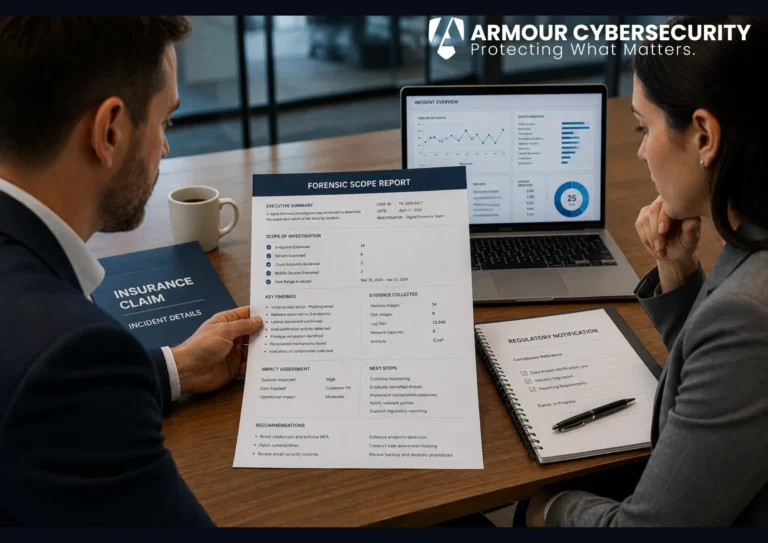
Court-ready investigation reports with adequate and acceptable evidence for legal proceedings. Expert witness testimony support where required. Documentation structured for use with internal teams, regulators, and counsel.
Built for organizations and counsel whose matter requires digital forensic investigation conducted to a standard that holds up under scrutiny.
Companies experiencing a security incident requiring forensic investigation to understand attack scope, identify exfiltrated data, and produce evidence for legal, regulatory, and insurance use.
External counsel, internal legal teams, and breach counsel requiring forensic evidence preservation and investigation for civil, criminal, or regulatory matters.
Cyber insurance claim investigations requiring documented forensic evidence to support coverage determinations, attribution, and claim quantum analysis.
Organizations conducting investigations involving employee misconduct, data theft, intellectual property disputes, or other matters where digital evidence supports the investigation.
The investigation methodology follows the eight standard phases recognized in digital forensic science, mapped to leading digital evidence standards. The six methodology phases below consolidate those eight investigation phases into the engagement workflow.
Action performed immediately after a security incident. Identification of systems and data in scope. Preservation of volatile evidence (memory, network state, active sessions) before it is lost. Coordination with the broader response team.
Identification of devices and data sources involved in the incident. Forensically sound collection using established methods appropriate to each medium (live, static, network, cloud, mobile). Chain of custody initiated from first action.
Secure storage of evidence in controlled forensic environment. Verification that collected data is accurate, authentic, and accessible. Retrieval of Electronically Stored Information (ESI) using methods that preserve evidential integrity.
Examination, identification, separation, conversion, and modeling of acquired data to transform raw information into useful evidence. Analysis of attack vectors, malicious software, data access patterns, and indicators of compromise.
Relating evidential data to the security incident or matter under investigation. Thorough assessment based on the scope of the case. Peer review of findings before they appear in the final report.
Comprehensive reporting and documentation of all findings. Report structured to provide adequate and acceptable evidence for legal proceedings, regulatory submissions, insurance claims, or internal use as appropriate to the engagement.
Nine integrated deliverables from the forensic engagement. Each is produced with chain-of-custody discipline, peer review, and evidential rigor sufficient for the use the engagement was scoped to support.
Comprehensive report covering the investigation methodology, evidence collected, analysis conducted, findings, and conclusions. Report structured to provide adequate and acceptable evidence for legal proceedings.
Detailed documentation of evidence acquisition including methods used, tools applied, hash verification, and the specific procedures followed for each medium collected.
Complete chain of custody documentation from first acquisition through analysis and reporting, structured to support evidential standards required by courts, regulators, and counsel.
Static and dynamic analysis report for any malicious software identified, including capabilities, persistence mechanisms, indicators of compromise, and remediation guidance.
Memory analysis findings including running processes, network artifacts, malware in memory, encryption keys, and other volatile evidence that disk-based forensics cannot recover.
Analysis of data accessed or re-routed through the network using log analysis, memory dumps, and open-source intelligence techniques to identify evidence of stolen data.
Identification of the attack vector and methods used, supporting both incident understanding and the organization's ability to prevent recurrence.
Complete documentation pack suitable for use in legal proceedings, regulatory submissions, or insurance claims, with all evidence handled to criminal standards.
Where required, expert witness testimony support from the senior consultant who led the investigation, with the report and underlying evidence prepared for examination and cross-examination.
Founded by military intelligence veterans with senior advisors from PwC, KPMG, Deloitte, EY, and Mandiant. The track record reflects the discipline.
Organizations across finance, healthcare, technology, energy, legal, and government trust Armour Cybersecurity to protect what matters.
Long-term engagements built on consistent quality, predictable delivery, and consulting relationships that compound in value over time.
Cross-sector experience spanning every major regulated industry, with operations supporting clients across North America, Latin America, and beyond.
A vetted catalogue of forensic tools and proprietary methods deployed in support of digital evidence acquisition, malware analysis, memory analysis, and investigation reporting.
Schedule a discovery call to scope an investigation, or contact us directly if you require immediate forensic engagement. Protecting What Matters starts with evidence preserved correctly.
Book Discovery CallCommon questions from CISOs, General Counsel, breach counsel, insurance carriers, and HR leaders evaluating a Technical Forensics engagement.
Reach out to scope a forensic engagement or engage emergency investigation support. Discovery calls are scheduled within two business days. Active incidents are escalated immediately.
Tell us about your situation. Indicate whether this is an active incident, an ongoing investigation, or proactive engagement scoping.
Digital forensics insights for organizations that need evidence to hold up with insurers, regulators, and courts.