Endpoint Detection & Response

Stop the threats that land on your endpoints before they spread across your business.

Endpoints are where attackers gain a foothold. Phishing payloads execute there, credentials are stolen there, ransomware launches there. Armour Cybersecurity deploys, tunes, and operates enterprise-grade Endpoint Detection and Response across your fleet, with the threat hunting playbooks, policy discipline, and hypercare support that turn an EDR platform into an active defense rather than another dashboard.

What This Is

EDR done by people who deploy and run it for a living.

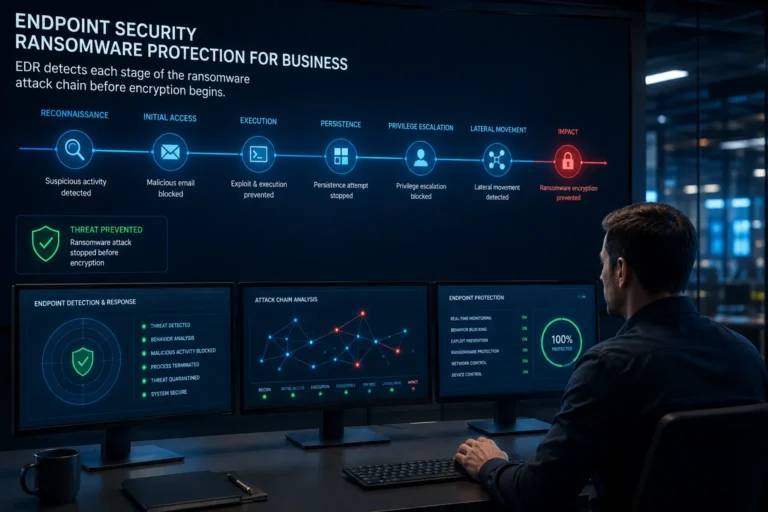
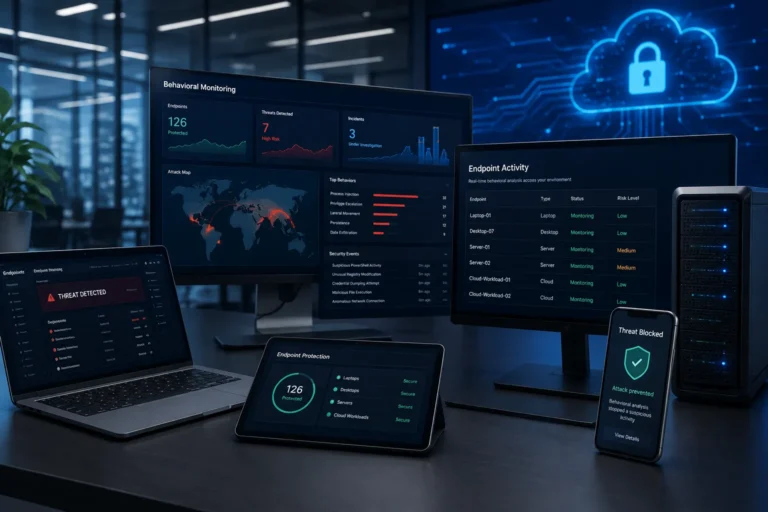
Endpoint Detection and Response is the layer of your security program that watches what actually executes on laptops, desktops, servers, and cloud workloads. A properly deployed EDR catches the behaviors that signature-based antivirus misses: process injection, credential theft, privilege escalation, lateral movement, and the fileless techniques modern adversaries rely on to operate quietly inside your environment.

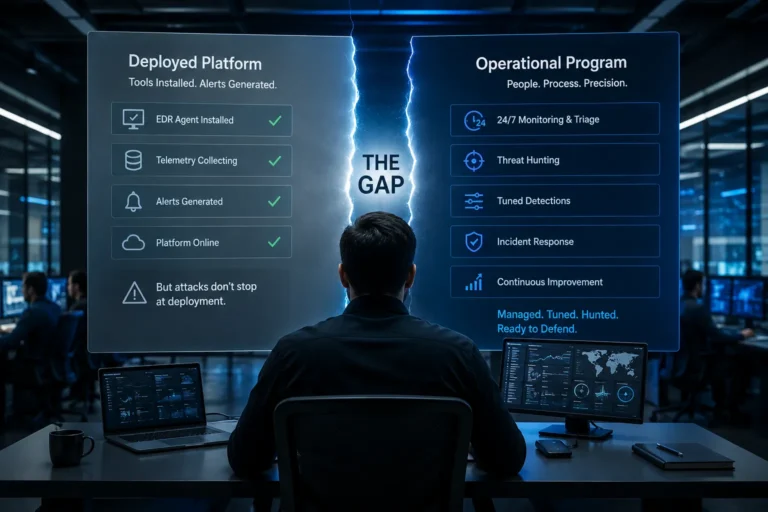
The platform alone is not the protection. Effective EDR depends on policy configuration tuned to your business, threat hunting playbooks aligned to the threats you actually face, administrators who know how to investigate alerts, and ongoing optimization as the environment changes. Most organizations buy the platform and never reach that operational maturity.

Armour Cybersecurity covers the full lifecycle. We assess your current endpoint posture, select the right platform for your environment, deploy through a structured pilot-and-rollout, configure policies and detection rules to your business, build threat hunting playbooks tailored to your industry, train your administrators, and provide ninety days of post-deployment hypercare so adoption sticks.

9
Service domains covering assessment, platform selection, deployment, tuning, threat hunting, training, and ongoing optimization.
6
Standardized engagement phases from current-state assessment through ongoing management and optimization.
90
Days of post-deployment hypercare included with every full-scale deployment engagement to ensure adoption holds.

The Reality

Why most EDR deployments underperform.

Buying the platform is the easy part. Most organizations never reach the operational maturity that turns EDR into active defense. The gap between deployed and effective is where attackers live.

Without a structured EDR program

  • Agents deployed with default policies that ignore your business and risk profile.
  • Alert noise so high that real threats are buried in false positives.
  • Administrators who can deploy the agent but cannot investigate an alert.
  • Threat hunting capability listed in the brochure but never operationalized.
  • Coverage gaps because some endpoints, servers, or cloud workloads were missed.
  • Detection rules that never get tuned as the environment changes over time.
  • No documented response procedures when the platform finds something serious.

With Armour Cybersecurity EDR Services

  • Policies configured to your business, your applications, and your risk profile.
  • Tuned detection rules with managed alert quality, so real threats surface fast.
  • Administrators trained to investigate alerts, not just observe the dashboard.
  • Threat hunting playbooks tailored to the threats your industry actually faces.
  • Complete coverage across laptops, servers, virtual workloads, and cloud assets.
  • Ongoing tuning and optimization as your environment evolves.
  • Documented response procedures with defined ownership and escalation.
Our EDR Services

End-to-end coverage of the endpoint protection lifecycle.

Engage individual services or a coordinated full-lifecycle program. Every service is delivered against the same standardized methodology so deliverables compose cleanly into a unified endpoint security function.

01 / ASSESSMENT

Endpoint Posture Assessment

Inventory of endpoints across the fleet, evaluation of existing protection tooling, identification of coverage gaps, and assessment of detection and response capability against the threats your business faces.

02 / SELECTION

Platform Selection & Architecture

Vendor-neutral evaluation of EDR platforms against your environment, integration requirements, and operational maturity. Output is a defensible selection backed by criteria your leadership can approve.

03 / PILOT

Pilot Deployment

Controlled rollout to a representative pilot group covering Windows, macOS, Linux, and server endpoints. Validates performance, compatibility, and detection capability before enterprise-wide rollout.

04 / ROLLOUT

Enterprise Deployment

Structured rollout across the full endpoint fleet with deployment runbook, schedule, and progress tracking. Coordinated with IT operations to minimize disruption to the business.

05 / POLICY

Policy Configuration & Tuning

Detection rules and policies configured to your applications, business workflows, and risk appetite. Tuned to minimize false positives while ensuring real threats surface immediately.

06 / HUNTING

Threat Hunting Playbooks

Up to five custom threat hunting playbooks tailored to your industry, threat profile, and the techniques most likely to be used against your organization. Built so your team can run them independently.

07 / TRAINING

Administrator Training

Hands-on training for your administrators covering daily operations, alert triage, investigation workflows, response actions, and platform troubleshooting. Documented for ongoing reference.

08 / HYPERCARE

Post-Deployment Hypercare

Ninety days of post-deployment support covering tuning adjustments, alert response coaching, deployment expansion, and the issues that always surface in the first three months of operation.

09 / OPTIMIZATION

Ongoing Management & Optimization

Optional retainer covering periodic detection rule reviews, threat intelligence feed updates, coverage validation, and managed threat hunting for organizations without a dedicated security operations team.

Who This Is For

Built for organizations serious about endpoint defense.

Companies replacing legacy AV

Organizations moving from signature-based antivirus to modern EDR for the first time. We handle the migration, configuration, and operational adoption that determine whether the new platform actually delivers.

Compliance-driven deployments

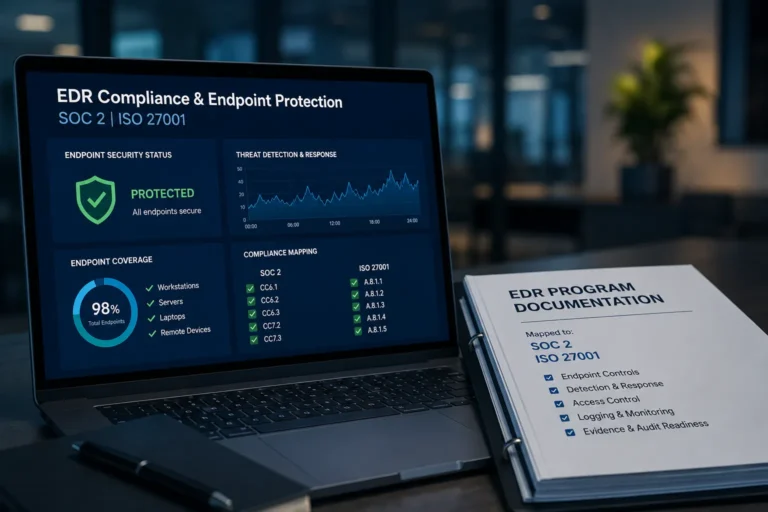
Companies pursuing SOC 2, ISO 27001, HIPAA, PCI DSS, or CMMC certification that require advanced endpoint protection with documented detection, response, and policy enforcement capabilities.

Post-incident programs

Organizations that experienced a breach, ransomware event, or near-miss that revealed how much was missing from endpoint defense. We build the program that should have been in place.

Mid-market and enterprise

Organizations with hundreds to thousands of endpoints needing structured deployment, consistent policy enforcement, and threat hunting capability beyond what default platform configurations provide.

Our Methodology

A six-phase engagement built on disciplined consulting practice.

Every Armour Cybersecurity EDR engagement follows the same standardized phases. The discipline is what turns platform deployment into operational protection.

1

Assessment & Planning

Document the endpoint inventory and configurations, evaluate current endpoint security posture, assess existing protection tool effectiveness, and identify gaps in visibility and detection capability.

2

Solution Design & Selection

Define endpoint protection requirements against your environment and risk profile, evaluate platforms against documented criteria, design agent deployment architecture, and plan integration with existing security tools.

3

Pilot Deployment

Deploy to a controlled pilot group of endpoints, monitor for performance and compatibility issues, gather user feedback on agent impact, and validate detection and response capabilities before broader rollout.

4

Full-Scale Deployment

Deploy the agent to all in-scope endpoints, configure security policies and detection rules, enable threat intelligence feeds, and establish a baseline of normal endpoint activity for the environment.

5

Threat Detection & Response

Monitor for suspicious endpoint activity, investigate alerts following the agreed incident response process, perform remediation and malware removal, and collect evidence for forensic analysis where required.

6

Ongoing Management & Optimization

Review and tune detection rules regularly, conduct user awareness training on endpoint security, maintain the patch management process, and provide reporting and metrics on endpoint security posture.

What You Receive

Outputs your administrators and auditors can actually use.

Every deliverable is structured for direct use by your IT and security teams, your administrators, and your external auditors when applicable.

Endpoint Posture Assessment

Inventory of endpoints across the fleet with current protection status, coverage gaps, and prioritized recommendations for closure.

Platform Selection Recommendation

Vendor-neutral platform comparison against your environment with documented criteria, weighted scoring, and a defensible selection recommendation for leadership approval.

Deployment Runbook

Step-by-step agent deployment process covering pilot, full-scale rollout, exception handling, and rollback procedures.

Configuration & Policy Documentation

Documented platform tuning, detection rules, and policy enforcement configuration aligned to your business workflows and risk profile.

Threat Hunting Playbooks

Up to five custom threat hunting playbooks tailored to your industry and threat profile, written for your team to execute independently.

Administrator Training Materials

Documented training covering platform administration, alert triage, investigation workflows, response actions, and troubleshooting procedures.

Deployment Completion Report

Final status report covering coverage achieved, policy configuration, training completion, and recommended next steps.

Hypercare Activity Log

Ninety-day record of tuning adjustments, alert investigations, deployment expansions, and operational improvements made during hypercare.

Compliance Mapping

Documented mapping of endpoint controls to NIST CSF, ISO 27001, SOC 2, HIPAA, PCI DSS, and CIS Controls requirements for direct use during audits.

Why Armour Cybersecurity

The numbers behind the work.

Founded by military intelligence veterans with senior advisors from PwC, KPMG, Deloitte, EY, and Mandiant. The track record reflects the discipline.

260+

Clients Served

Organizations across finance, healthcare, technology, energy, legal, and government trust Armour Cybersecurity to protect what matters.

97%

Client Retention Rate

Long-term engagements built on consistent quality, predictable delivery, and consulting relationships that compound in value over time.

52+

Industries · Worldwide Reach

Cross-sector experience spanning every major regulated industry, with operations supporting clients across North America, Latin America, and beyond.

80+

Cybersecurity Technology Solutions

A vetted catalogue of technology partnerships and proprietary methods deployed in support of every engagement.

Ready to turn your endpoint platform into active defense?

Schedule a no-obligation EDR scoping conversation with our endpoint security team.

Schedule an EDR Consultation
Protecting What Matters.
Frequently Asked

EDR questions, answered directly.

What is EDR and how is it different from antivirus?
Antivirus blocks known malware based on signatures. EDR (Endpoint Detection and Response) watches behavior on the endpoint and detects the techniques attackers actually use, including process injection, credential theft, lateral movement, and fileless attacks. Most modern EDR platforms include traditional antivirus capability plus the behavioral and response layer that signature-only tools cannot provide.
Which EDR platform should we use?
We are vendor-neutral. Selection depends on your environment, integration requirements, operational maturity, and budget. During the platform selection phase we evaluate the leading platforms against documented criteria for your environment and recommend the best fit. We have deployed and operated every major EDR platform in production environments.
How long does a typical EDR deployment take?
Most deployments complete within eight to twelve weeks. Pilot planning typically takes two weeks, pilot deployment and validation takes two to three weeks, and enterprise rollout takes four to six weeks depending on fleet size and complexity. The ninety-day hypercare period begins after enterprise rollout completes.
Will EDR deployment disrupt my users?
Disruption is minimal when deployments are run properly. Modern EDR agents are lightweight and run in the background. The pilot phase exists specifically to identify and resolve any compatibility or performance issues before the broader rollout. We coordinate with IT operations on rollout windows to minimize impact on the business.
Do we still need an in-house team to run EDR?
EDR can be operated in-house or as a managed service. With proper administrator training and tuned playbooks, an existing IT or security team can effectively run the platform. For organizations without a dedicated security operations capability, we offer ongoing managed services covering alert triage, investigation, and threat hunting on a retainer basis.
Can EDR satisfy my compliance requirements?
Yes, when properly deployed and operated. Modern EDR platforms satisfy advanced endpoint protection requirements in NIST CSF, ISO 27001, SOC 2, HIPAA, PCI DSS, CMMC, and CIS Controls. We map deployed controls to the framework requirements applicable to your business and structure documentation for direct use during audits.
What does the ninety-day hypercare include?
Hypercare covers the operational issues that always surface in the first three months: detection rule tuning as you learn your environment's normal patterns, alert investigation coaching as your administrators encounter real threats, deployment expansion to endpoints discovered post-rollout, and policy adjustments as business workflows evolve. It is the bridge from deployment to confident independent operation.
Get Started

Schedule your EDR scoping conversation.

Tell us about your endpoint environment and what is driving the conversation. We will respond within one business day with next steps.

Speak with our endpoint security team

Headquarters
77 Bloor St West, Suite 600
Toronto, ON

Request a consultation