QUICK ANSWER To qualify for cyber insurance in 2026, most insurers require multi-factor authentication (MFA), endpoint detection and response (EDR), regular security patching, secure and tested backups, and security awareness training. Organizations that can’t demonstrate these controls face higher premiums, reduced coverage, exclusions, or denied applications |
KEY TAKEAWAYS ☑ MFA, EDR, patching, secure/immutable backups, and security awareness training are now baseline requirements. ☑ Missing controls lead to higher premiums, lower limits, exclusions, or outright denial. ☑ A cyber insurance readiness assessment helps you close gaps before you apply or renew. ☑ Underwriters increasingly verify controls rather than simply trusting the questionnaire. ☑ Cyber insurance has become a reflection of your security maturity — stronger controls mean better coverage at better rates. |
Cyber insurance has become a core part of modern risk management. As attacks grow in frequency and impact, organizations want financial protection against ransomware, data breaches, and operational disruption.
But getting covered is no longer simple. Insurers now require organizations to demonstrate strong cybersecurity controls, mature risk management practices, and a well-documented security posture before they will issue or renew a policy. Understanding these requirements is essential if you want to qualify for coverage — and avoid denied claims.
Why Cyber Insurance Requirements Are Increasing
Over the past several years, insurers have absorbed major losses from large-scale cyber incidents. High-profile ransomware attacks and supply chain breaches forced providers to tighten their underwriting standards.
Most insurers now run detailed cybersecurity evaluations before issuing a policy. Organizations that fall short of minimum requirements may face:
- Higher premiums
- Reduced coverage limits
- Policy exclusions
- Denied applications
In short, cybersecurity readiness and insurability are now tightly connected.
What Controls Do Insurers Require for Cyber Insurance?
Requirements vary by provider, but most insurers evaluate the same core controls.
Multi-factor authentication (MFA)
Many insurers also favor organizations that have adopted Zero Trust security principles, where users, devices, and applications must continuously verify identity and authorization before accessing sensitive resources.
MFA is one of the most commonly required controls because it sharply reduces the risk of unauthorized access. Insurers typically expect MFA on:
- Remote access systems
- Administrative accounts
- Cloud services
- Email platforms
Organizations without MFA often can’t get coverage at all.
Endpoint protection and monitoring
Many insurers now expect organizations to maintain continuous security monitoring capabilities. This may include managed detection and response (MDR), security information and event management (SIEM) platforms, or managed SOC services that provide around-the-clock threat detection and incident investigation.
Insurers expect advanced endpoint security that can detect malware, ransomware, and suspicious activity. Modern solutions usually include endpoint detection and response (EDR), behavioral threat detection, and automated containment — so threats are caught and stopped fast.
Regular security patching
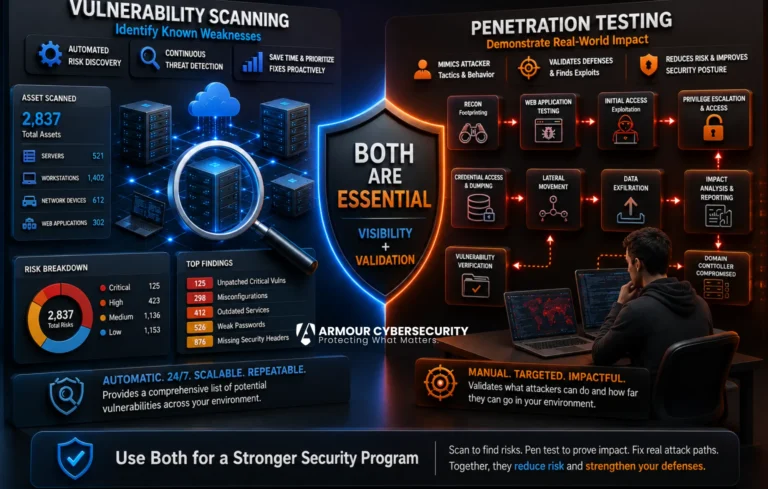
Unpatched software is one of the most common causes of incidents. Insurers want a structured vulnerability management program that identifies new vulnerabilities, prioritizes critical risks, applies patches promptly, and verifies remediation. Underwriters increasingly ask how quickly critical vulnerabilities are addressed and whether organizations conduct regular vulnerability assessments.
Secure backup and recovery
Ransomware often targets backups to block recovery. Insurers require backup strategies that let you restore systems and data after an attack, typically including:
- Regular backup schedules
- Offline or immutable backups
- Backup testing and validation
- Disaster recovery planning
You need to show you can recover without paying a ransom.
Security awareness training
Phishing succeeds when employees aren’t trained to spot it. Insurers expect regular security awareness training that teaches your team to recognize threats and follow security best practices.
Why Cyber Insurance Applications Get Denied
Many organizations are surprised when an application is rejected or coverage is reduced. The most common reasons are:
- No multi-factor authentication
- Poor vulnerability and patch management
- Weak or untested backups
- Inadequate incident response planning
- Limited security monitoring is one of the most common reasons applications get denied
Address these early and you significantly improve your odds of favorable coverage terms.
How to Prepare for Cyber Insurance Readiness
The best way to prepare for underwriting is a cyber insurance readiness assessment that evaluates whether your controls meet insurer expectations — a focused review of whether your existing controls meet insurer expectations. It typically includes:
- Evaluation of your security technologies
- Review of your security policies and procedures
- Risk management analysis
- Identification of control gaps
The findings let you strengthen your posture before you apply, so you walk into underwriting prepared.
The Role of Cyber Insurance Advisory Services
Policies are complex and coverage terms vary widely. Advisory services help you navigate the process and choose the right coverage, usually assisting with:
- Insurance readiness assessments
- Security control improvement recommendations
- Policy coverage analysis
- Risk mitigation planning
The result is lower risk and better insurability — often at a better price.
How Underwriters Verify Cybersecurity Controls
Many organizations assume insurers simply rely on application questionnaires. In reality, underwriters increasingly verify cybersecurity controls through external scanning, supplemental questionnaires, interviews, and evidence requests. Organizations may be asked to demonstrate MFA deployment, backup testing results, endpoint security coverage, vulnerability management processes, and incident response procedures. Being able to provide clear documentation can significantly improve underwriting outcomes and reduce policy costs.
This section targets:
- cyber insurance underwriting
- cyber insurance requirements
- cyber insurance questionnaire
- cyber insurance controls
which are highly searched terms.
Frequently Asked Questions
Use these Q&As to populate FAQPage structured data so they’re eligible for rich results and AI answer engines.
What controls do insurers require for cyber insurance?
Most insurers require multi-factor authentication (MFA), endpoint detection and response (EDR), a structured patching/vulnerability management program, secure and tested backups (ideally offline or immutable), and security awareness training. Some also expect a tested incident response plan and security monitoring.
Why was my cyber insurance application denied?
The most common reasons include missing MFA, weak vulnerability management, untested backups, inadequate security monitoring, and the absence of a documented incident response plan. Insurers may also deny applications when organizations cannot provide evidence that required controls are actively maintained and monitored.
Is MFA mandatory for cyber insurance?
In practice, yes. MFA on remote access, admin accounts, cloud services, and email is one of the most consistently required controls, and many insurers won’t offer coverage without it.
What is a cyber insurance readiness assessment?
It’s a focused review that checks whether your security controls meet insurer expectations. It includes a comprehensive cybersecurity risk assessment of your technologies, policies, and risk management processes, helping identify the gaps that should be addressed before you apply.
How do backups affect cyber insurance eligibility?
Insurers want proof you can recover without paying a ransom. That means regular backups, offline or immutable copies, and regular testing. Weak or untested backups are a frequent cause of denial or higher premiums.
Can an MSSP help us qualify for cyber insurance?
Yes. A managed security services provider can implement and document the required controls — MFA, EDR, patching, monitoring, and backup — and provide the evidence underwriters look for, improving both your insurability and your rates.
Get Cyber Insurance Ready with Armour
Cyber insurance has evolved from a financial safeguard into a direct measure of cybersecurity maturity. Organizations that demonstrate strong security controls, effective governance, and proactive risk management are more likely to secure broader coverage, lower premiums, and more favorable policy terms.
Organizations with strong controls, governance, and risk management are far more likely to qualify and to secure favorable premiums.
A comprehensive cyber insurance readiness assessment aligned with current insurer underwriting requirements.
Hands-on help implementing MFA, EDR, patching, and secure backups
Policy coverage analysis and risk mitigation guidance
If you’re preparing for cyber insurance underwriting or a renewal, Armour’s Cyber Insurance Advisory
Services can help you evaluate readiness, close control gaps, and optimize your insurance strategy.
Get a Cyber Insurance Readiness Assessment →
Armour Cybersecurity is a full-service Managed Security Services Provider (MSSP) helping small and
mid-sized businesses across North America and Latin America build stronger, simpler security — in English
and Spanish.