
Every organization has gaps in its defenses. The uncomfortable truth is that someone will eventually find those gaps — and the only real question is whether it will be your security team or an attacker. Penetration testing exists to make sure it is your team first.
Professional penetration testing services, often called ethical hacking or pen testing, involve a controlled cybersecurity assessment in which experienced security professionals simulate real-world attacks against an organization’s systems, networks, and applications. The objective is not simply to list vulnerabilities — it is to demonstrate, in concrete terms, how an attacker could exploit them and what the consequences would be.
For organizations serious about cybersecurity, penetration testing is one of the most valuable investments available. It cuts through assumptions, validates whether existing controls actually work, and provides the kind of actionable intelligence that automated scanning tools simply cannot deliver.
What Separates Penetration Testing from Vulnerability Scanning?
This is one of the most common points of confusion in cybersecurity, and it is worth addressing directly. A vulnerability assessment or automated scan identifies known weaknesses in systems by comparing them against a database of documented vulnerabilities. It is fast, scalable, and excellent for maintaining ongoing visibility into your environment.
Penetration testing is something different. A skilled pen tester does not just catalog what could be wrong — they actively try to exploit it. They chain multiple vulnerabilities together, use social engineering, explore misconfigurations, and test whether security tools respond appropriately. They behave, as closely as possible, like a real attacker.
The distinction matters because many vulnerabilities that look minor in isolation become serious when combined. A low-severity misconfiguration plus an overprivileged service account plus a single unpatched system can create an attack path that no automated scanner would flag as critical — but that a skilled pen tester would exploit in hours.

How Does Penetration Testing Work? The Five Phases
Professional penetration testing follows a structured methodology that mirrors how real attackers operate. Understanding these phases helps organizations appreciate both what they are paying for and what to expect from an engagement.
Phase 1: Planning and Reconnaissance
Before any active testing begins, the pen tester defines the scope of the engagement with the client, often as part of broader Cybersecurity Advisory Services that help organizations identify priorities before testing begins. Which systems are in scope? What are the objectives — simulating an external attacker, an insider threat, or a targeted attack on a specific application? What constraints apply?
During reconnaissance, testers gather as much information as possible about the target environment using publicly available sources. This mirrors what attackers do before launching an operation: mapping out domains, identifying technologies in use, finding email addresses and employee information that could be used in phishing, and cataloging any exposed services.
Phase 2: Scanning and Vulnerability Identification
With reconnaissance complete, testers begin actively probing the target for weaknesses. This involves a combination of automated scanning tools and manual analysis. Testers look for outdated software, misconfigured services, insecure authentication mechanisms, exposed administrative interfaces, and application-layer vulnerabilities.
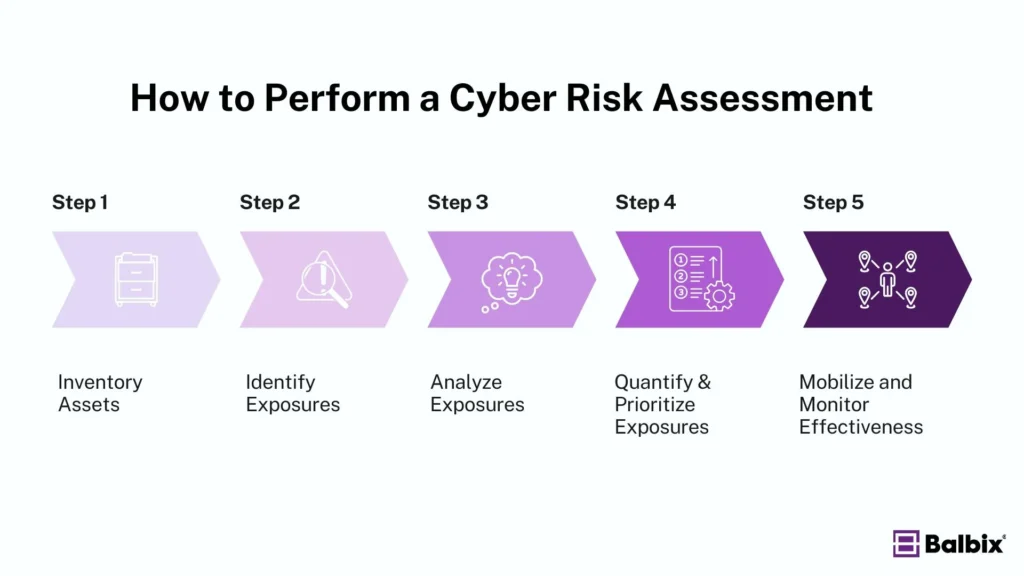
This phase produces a preliminary picture of the attack surface and identifies the most promising avenues for exploitation.This structured review mirrors a cybersecurity risk assessment, mapping real exposure rather than theoretical weaknesses.
Phase 3: Exploitation
This is where penetration testing diverges most sharply from vulnerability scanning. Testers attempt to actively exploit the vulnerabilities they have identified to gain unauthorized access. The goal is to demonstrate real-world impact — not just that a vulnerability exists, but what an attacker could actually do with it.
Exploitation might involve gaining administrative access to a server, extracting data from a database, compromising credentials, or pivoting from a low-privilege foothold to a more sensitive system.
Phase 4: Post-Exploitation and Privilege Escalation
Once initial access is achieved, testers evaluate how far they can extend their foothold. Can they escalate from a standard user account to administrator privileges? Can they access other systems on the network? Can they reach sensitive data, backup systems, or security tools?
Post-exploitation analysis is critical because it answers the question organizations most need answered: if an attacker gets in, how bad can it get?
Phase 5: Reporting and Remediation Guidance
Every finding from the engagement is documented in a detailed report that includes technical evidence, exploitation walkthrough, risk ratings, and specific remediation recommendations. A good penetration testing report is actionable — it tells security teams exactly what to fix, in what order, and why.
Many professional engagements also include a debrief session where testers walk the client’s technical and executive teams through findings and answer questions, helping organizations strengthen their ongoing managed security services strategy.
What Are the Different Types of Penetration Testing?
Not all penetration tests are the same. Organizations can choose from several types depending on their infrastructure, risk profile, and objectives.
External Penetration Testing
External pen tests simulate an attacker who has no prior access to the organization’s internal environment. Testers approach from the internet, targeting public-facing systems such as websites, email servers, VPN gateways, and cloud services. This type of test answers a critical question: could a determined attacker gain initial access to your environment from the outside?
Internal Penetration Testing
Internal tests simulate an attacker who has already gained a foothold inside the network — whether through a phishing attack, a compromised vendor, or a malicious insider. Starting from within the environment, testers attempt to escalate privileges, move laterally, and reach critical systems. These engagements often reveal the most significant risks, because internal networks frequently have weaker controls than perimeter defenses.
Web Application Penetration Testing
With so much business logic and data now residing in web applications, application-level testing has become one of the most in-demand forms of penetration testing. Testers probe applications for vulnerabilities including SQL injection, cross-site scripting, broken authentication, insecure direct object references, and business logic flaws.
Cloud Penetration Testing
Cloud environments introduce unique security challenges — misconfigurations, identity and access management weaknesses, over-permissive service accounts, and exposed storage buckets among them. Cloud pen tests evaluate the security of infrastructure hosted on AWS, Azure, Google Cloud, and other platforms.
Social Engineering Testing
Technical controls are only part of the equation. Social engineering tests evaluate whether employees can be manipulated into disclosing credentials, clicking malicious links, or granting unauthorized access. Phishing simulations, pretexting calls, and physical access attempts fall into this category.
Why Penetration Testing Is Important for Your Organization
Organizations often ask whether penetration testing is really necessary — especially if they already run vulnerability scans, maintain a firewall, and follow security best practices. The honest answer is that yes, it is necessary, and here is why.
Attackers do not stop at finding a single misconfiguration. They chain weaknesses, adapt their tactics, and look for paths that automated tools are not designed to find. Penetration testing replicates this adversarial mindset in a controlled way. It validates not just whether vulnerabilities exist, but whether your detection and response controls would actually catch an attack in progress.Penetration testing also provides organizations with something genuinely difficult to obtain otherwise: an honest, evidence-based picture of their real security posture rather than what their security tools report — and it directly informs stronger incident response services when a real attack eventually occurs. For boards, executives, and risk committees trying to make informed decisions about cybersecurity investment, that kind of clarity is invaluable.

Compliance and Penetration Testing
Beyond the security value, penetration testing is a requirement under several major compliance frameworks. PCI DSS requires annual external penetration testing and testing after significant infrastructure changes. SOC compliance auditors expect evidence of regular security testing as part of an effective security program.penetration testing as a recommended control. HIPAA-covered organizations increasingly treat pen testing as part of their required risk assessments.
For organizations operating in regulated industries — financial services, healthcare, legal, insurance — penetration testing is not just good practice. It is an expectation that auditors and clients are increasingly examining.
How Often Should You Conduct Penetration Testing?
The right frequency depends on the size and complexity of your environment, your regulatory obligations, and how quickly your infrastructure changes. As a baseline, most organizations benefit from at least one comprehensive penetration test per year. Organizations undergoing rapid growth, significant cloud adoption, or frequent application deployments may benefit from more frequent testing, continuous testing programs, or bundled managed security services that include ongoing pen test cycles.
Critical moments for penetration testing include immediately after deploying a new application or major infrastructure change, following a security incident, before a significant regulatory audit, and when onboarding a new cloud environment.
Strengthening Your Security Posture with Professional Testing
Armour Cybersecurity offers professional penetration testing services designed to give Canadian organizations a clear, actionable picture of their real-world security exposure. Our team combines deep technical expertise with structured methodologies to identify the vulnerabilities that matter most — and deliver findings in a format that drives real remediation.
Whether you are preparing for a compliance audit, evaluating the security of a new application, or simply trying to understand where your defenses are strongest and weakest, professional penetration testing is one of the most direct investments you can make in your organization’s security. Learn more at armourcyber.io.