By David Chernitzky, CEO, Armour Cybersecurity · Serving Toronto and organizations across North America · Last updated August 25, 2026
Quick Answer
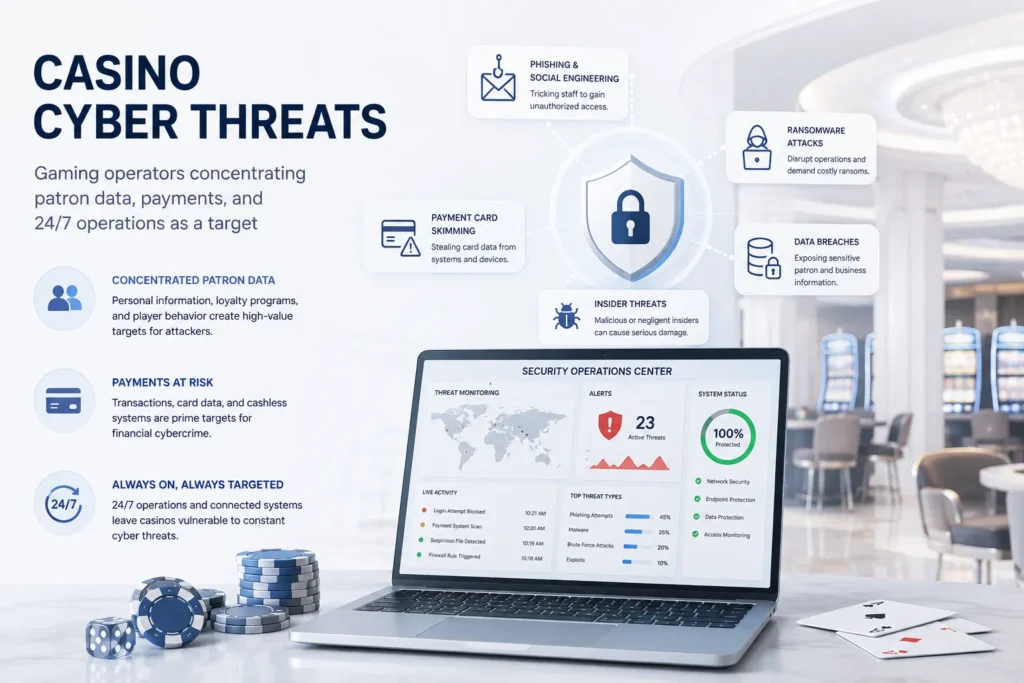
Casinos and gaming operators concentrate patron financial data, process enormous payment volumes, and run operations that cannot stop. That combination makes them a primary target for ransomware operators, organized fraud groups, and data thieves. The casino cyber threats the sector faces are not opportunistic; high-profile incidents have shown that even large, sophisticated operators can be breached, with significant operational, financial, and regulatory consequences.
Key Takeaways
- Gaming operators hold patron data, payment credentials, and high-value loyalty records that are directly monetizable on criminal markets.
- Ransomware attacks against casino floor and back-office systems create immediate operational shutdowns that generate significant leverage for extortion demands.
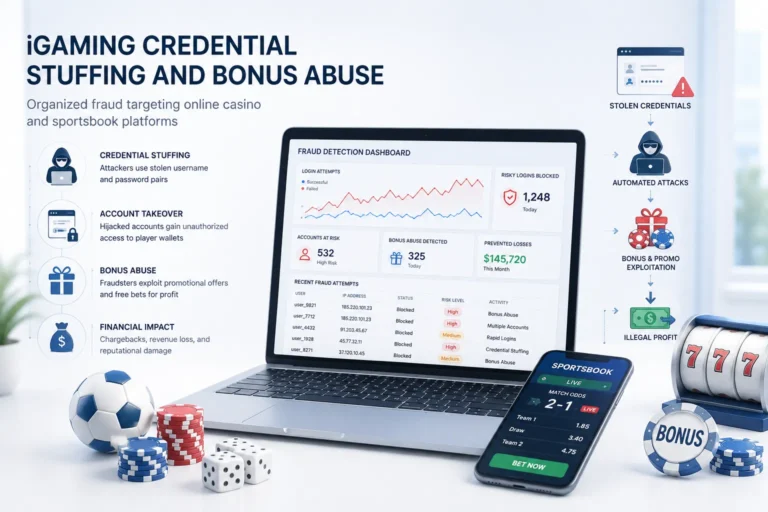
- Online gaming platforms are under constant automated attack from credential stuffing, bonus abuse, and payment fraud tools operated by organized criminal groups.
- The 24/7 nature of gaming operations limits the window for security maintenance and creates pressure that attackers deliberately exploit.
- Gaming integrity attacks, aimed at manipulating outcomes or evading AML controls, require cybersecurity controls that go beyond standard enterprise security.
What Makes the Gaming Sector Specifically Attractive to Attackers?
Casinos and gaming operators are attractive targets for reasons that go beyond the obvious. The concentration of patron financial data, payment card records, and high-net-worth VIP profiles in gaming databases gives attackers a rich dataset that has direct value on criminal markets. A breach of a casino loyalty programme can yield thousands of records containing names, addresses, payment details, and spending patterns across a wealthy customer base.
The payment volumes are equally attractive. Casino cage operations, iGaming deposit and withdrawal flows, and sportsbook payment processors handle enormous transaction volumes. An attacker who gains access to payment infrastructure, whether through a direct breach or through compromise of a third-party processor, has access to cash flows that dwarf what most enterprise targets offer.
The operational dependency on technology has grown dramatically. Modern casinos run slot floors, table-game management systems, surveillance infrastructure, loyalty platforms, and back-office operations on interconnected technology that was not designed with the current threat environment in mind. iGaming operators depend entirely on their platforms being available, accurate, and trusted by players. Disruption of any of these systems has immediate, measurable financial consequences.
Why Does the 24/7 Operational Model Create Security Challenges?
Gaming operations do not have maintenance windows in the traditional IT sense. A casino floor runs continuously. An iGaming platform that goes offline loses revenue by the minute and risks regulatory scrutiny for availability failures. A sportsbook that cannot accept wagers during a major sporting event faces direct financial loss and patron attrition.
Attackers understand this. Ransomware operators targeting gaming organizations time deployments to maximize pressure: late Friday nights before major sporting weekends, peak holiday casino periods, or the days leading up to large jackpot events. The calculus is that a gaming operator facing operational shutdown during a high-revenue period is more likely to pay a ransom than to take the time to restore from backup.
The same operational pressure makes routine security maintenance harder. Patching systems that are in active use around the clock requires careful planning and change management. Security updates that would be routine in an office environment require coordination across operational teams that have their own priorities. Deferred patching accumulates into the vulnerability surface that attackers exploit.
What Are the Most Active Threat Patterns Against Gaming Organizations?
Ransomware Targeting Casino Operations
Ransomware attacks against major gaming operators have become public knowledge following several high-profile incidents that disrupted hotel check-in systems, slot floors, payment processing, and corporate email simultaneously. The breadth of these attacks reflects a deliberate strategy: encrypt as many interconnected systems as possible to maximize operational impact and negotiating leverage.
The entry points for these attacks have varied: social engineering of IT helpdesk staff, compromise of third-party vendor credentials, exploitation of unpatched VPN and remote access vulnerabilities. The common thread is that the initial access exploited gaps in controls that a structured cybersecurity programme would have closed.
Organized Fraud Against iGaming and Sportsbook Platforms
Online gaming platforms face a different category of organized threat. Criminal groups operate purpose-built tools for credential stuffing, bonus abuse, and payment fraud against iGaming platforms at scale. These are not opportunistic attacks. They are industrialized operations that identify platform vulnerabilities, obtain credential lists from relevant breach databases, and run automated campaigns designed to extract value before fraud controls trigger. Threat intelligence that monitors underground discussion of gaming-specific fraud tools gives operators warning before a campaign reaches their platform.
Bonus abuse operations create fake accounts or compromise real ones to claim promotional offers repeatedly. Payment fraud operations use compromised payment credentials to fund gaming accounts, then withdraw winnings through a different payment method to launder the funds. Both patterns impose direct financial losses on operators and create regulatory exposure around AML controls.
Patron Data Theft and Extortion
High-roller and VIP patron records carry particular value beyond their financial data. Spending patterns, visit histories, personal preferences, and relationship details are useful for social engineering, targeted fraud, and in some cases extortion. Attackers who obtain VIP databases can approach patrons directly, threatening exposure of gambling activity to family members, employers, or regulators unless payment is made.
This threat pattern is distinct from mass credential theft and requires a different control response. Protecting high-value patron records with elevated access controls, monitoring for unusual access patterns, and encrypting sensitive patron data at the database level addresses an exposure that standard perimeter security does not cover.
How Does Gaming Integrity Connect to Cybersecurity?
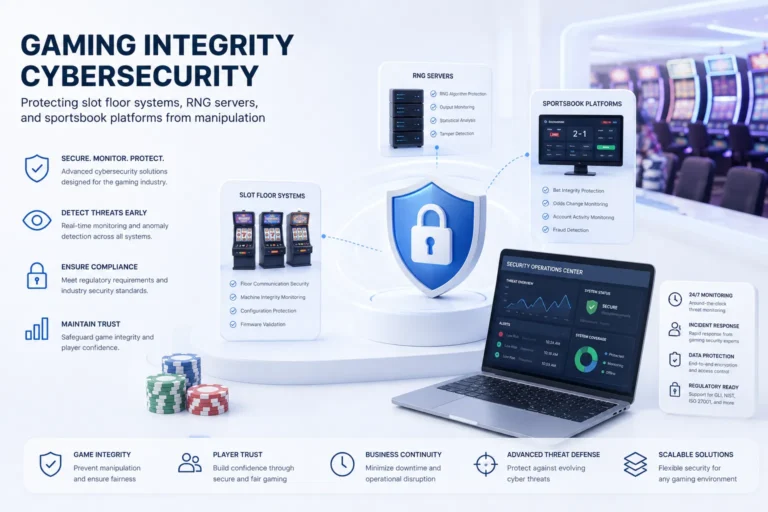
Gaming regulators in both Canada and the United States treat gaming integrity as a core licensing obligation. In Canada, provincial authorities such as the Alcohol and Gaming Commission of Ontario (AGCO) and Alberta’s AGLC oversee gaming operators, and in the United States state regulators such as the Nevada Gaming Control Board play the equivalent role. The technical systems that determine game outcomes, manage slot RNG parameters, record table game activity, and process sportsbook wagers are subject to regulatory oversight precisely because their integrity is fundamental to the fairness promise that gaming licences are built on.
Cybersecurity controls are the technical enforcement of gaming integrity obligations. Unauthorized access to slot floor management systems, manipulation of RNG parameters, or compromise of sportsbook odds-setting workflows constitutes both a cyber incident and a regulatory violation. The investigation that follows a gaming integrity event involves both the operator’s cybersecurity team and the applicable gaming regulator.
An integrated cybersecurity programme that covers gaming floor systems alongside corporate IT infrastructure, and that includes the access controls, monitoring, and security testing that regulators expect, addresses gaming integrity as a component of the overall security posture rather than as a separate concern.
What Does a Gaming-Aware Cybersecurity Programme Look Like?
Generic cybersecurity programmes miss the gaming-specific elements that matter most. A programme built for the gaming sector covers patron data protection with controls calibrated to the sensitivity of VIP records, payment security aligned to PCI DSS requirements in a high-volume transaction environment, online platform hardening against automated fraud tools, gaming floor system protection that accounts for the operational constraints of 24/7 environments, and AML technology control integrity.
Armour Cybersecurity works with casino operators, iGaming operators, and lottery corporations on gaming cybersecurity services that address the full gaming threat profile. Penetration testing covers online gaming platforms, casino floor systems, payment infrastructure, and the API connections to game studios, KYC providers, and payment processors. Threat intelligence monitors for credential exposure, brand abuse, and gaming-specific fraud tooling. The vCISO service provides the governance leadership that regulators expect from licensed operators.
Across the 260+ organizations Armour Cybersecurity protects in 52+ industries, the gaming operators that ride out an attack without a floor-wide shutdown are rarely the ones with the largest security teams. They are the ones who treated the casino floor, the iGaming platform, and the AML technology as one connected estate, segmented so an attacker cannot pivot from a phished helpdesk account to the slot systems, backed up so recovery does not depend on the ransom, so a bad night stays a bad night rather than becoming a licensing event.
Frequently Asked Questions
Are smaller regional casinos at the same risk as major resort properties?
Smaller properties are targeted differently but are not lower risk. They often have thinner security teams, less mature incident response capabilities, and older gaming floor technology with longer patch cycles. Ransomware groups specifically target organizations where the recovery cost of an attack is manageable relative to the disruption cost, which makes mid-size gaming operators a frequent target. The regulatory obligations around patron data protection and AML controls apply equally regardless of property size.
How do gaming regulators respond to a cybersecurity incident?
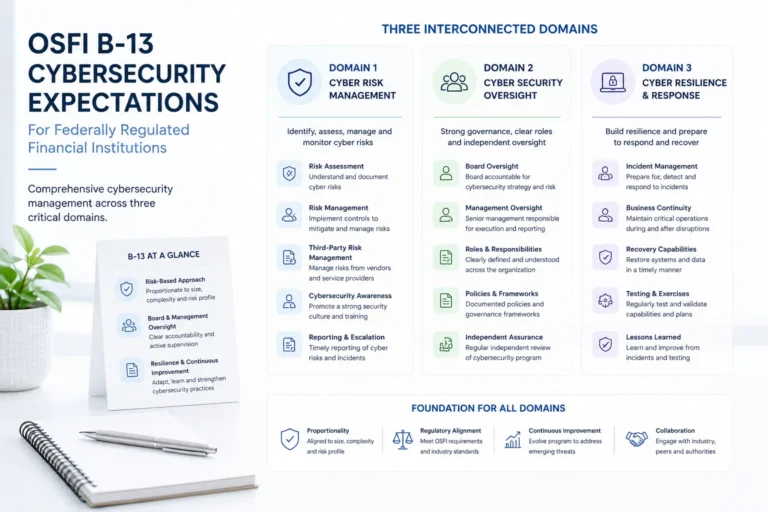
Gaming regulators in Canada and the US, including provincial authorities such as the AGCO and AGLC and US state regulators, expect prompt notification of incidents that affect patron data, gaming system integrity, or AML controls. The specific timelines and thresholds vary by jurisdiction, but operators that self-report promptly, demonstrate a documented incident response process, and show evidence of remediation are treated differently than those where incidents are discovered through regulatory examination. Having a cybersecurity incident response plan that includes regulatory notification procedures is a licensing-level expectation in most jurisdictions.
What is the relationship between AML compliance and cybersecurity?
AML compliance depends on the integrity of the transaction monitoring systems, access controls on AML platforms, and the accuracy of the patron identification and verification data those systems process. Cybersecurity controls protect the technology that AML compliance relies on. A compromise of the systems that feed transaction monitoring, or unauthorized access to patron KYC records, creates both a cybersecurity incident and an AML control failure. Both regulators, gaming and AML, will be involved in the response.
How do you test gaming systems without disrupting live operations?
All penetration testing engagements for gaming operators are conducted under agreed rules of engagement that define scope, testing windows, notification procedures, and live-system safeguards. Testing that affects slot floor or gaming platform availability is scheduled during agreed low-traffic windows with operational team coordination. Many test activities can be conducted against staging or isolated environments that mirror production without touching live gaming systems. Armour has experience operating within the change management constraints of 24/7 gaming environments.
The Bottom Line
Casinos and gaming operators are targeted because one operator concentrates patron data, high-volume payments, and revenue-critical systems that cannot go dark, and attackers time their move for the moment a shutdown hurts most. Ransomware, industrialized iGaming fraud, and VIP data extortion are the predictable plays, and gaming integrity and AML obligations mean a breach is a licensing problem as much as a security one. The operators who come through cleanly built one connected programme across the floor, the platform, and the compliance technology, sized to how regulated gaming actually runs. Armour Cybersecurity helps casinos, iGaming operators, and lottery corporations build gaming cybersecurity services that protect patron data, payment systems, and gaming integrity together, so an attack becomes an incident the operator manages rather than a shutdown the regulator investigates.
About the author
David Chernitzky is the CEO and Co-Founder of Armour Cybersecurity, a Toronto-based firm that protects organizations across North America from advanced cyber threats. He brings more than 25 years of cybersecurity and military cyber intelligence experience, having served as an officer in an elite technology unit before co-founding Armour. Armour’s team of military-intelligence veterans and senior advisors serves 260+ clients across 52+ industries with a 97% client retention rate. Learn more about Armour Cybersecurity.