By David Chernitzky, CEO, Armour Cybersecurity · Serving Toronto and organizations across North America · Last updated August 25, 2026
Quick Answer
Gaming integrity is not just an ethical obligation for licensed operators. It is a specific licensing condition enforced by gaming regulators in every US state and Canadian province where gaming is legal. The gaming integrity cybersecurity controls that protect slot floor systems, RNG parameters, table game technology, and sportsbook platforms from manipulation are part of the technical compliance programme that gaming authorities assess. A gap in these controls is simultaneously a security failure and a regulatory violation.
Key Takeaways
- Gaming integrity attacks target the technical systems that determine game outcomes, with the goal of manipulating results in favour of the attacker or accomplices.
- Slot floor management systems, RNG servers, table game management technology, and sportsbook platforms all require cybersecurity controls beyond standard enterprise IT protection.
- Insider threat is the most common vector for gaming integrity attacks. Privileged access controls, segregation of duties, and behavioural monitoring are the primary defences.
- Gaming regulators in the US and Canada require documented controls over gaming system access, change management, and audit logging. Penetration testing of gaming systems is increasingly expected.
- An integrated cybersecurity programme that covers gaming floor systems alongside corporate IT addresses integrity as a component of the overall security posture, not as a separate concern.
What Is a Gaming Integrity Attack?
A gaming integrity attack is any deliberate effort to manipulate gaming systems, outcomes, or records in ways that create an unfair advantage or financial gain outside the normal rules of the game. Our overview of why casinos and gaming operators are targeted lists gaming integrity among the sector’s attack patterns; this article goes deeper into the systems involved and the controls that protect them. These attacks differ from typical cybercrime in their specificity: the goal is not to steal data or deploy ransomware, but to influence the outcome of gaming activity in ways that generate profit for the attacker or their accomplices.
Gaming integrity attacks span a wide range of technical sophistication. At the lower end, they involve insiders with legitimate access using that access in unauthorized ways: a slot technician who adjusts machine parameters outside normal change control, a table game manager who manipulates player records. At the higher end, they involve external attackers who gain unauthorized access to gaming management systems and modify RNG seeds, jackpot trigger thresholds, or odds parameters without detection.
Both patterns are treated seriously by gaming regulators. The regulatory response to a confirmed integrity attack includes investigation, potential licence conditions, and in severe cases licence suspension. The reputational impact of a publicly disclosed integrity incident, regardless of scale, damages player trust in ways that are difficult to recover.
What Gaming Systems Are Most Vulnerable?
Slot Floor Management Systems
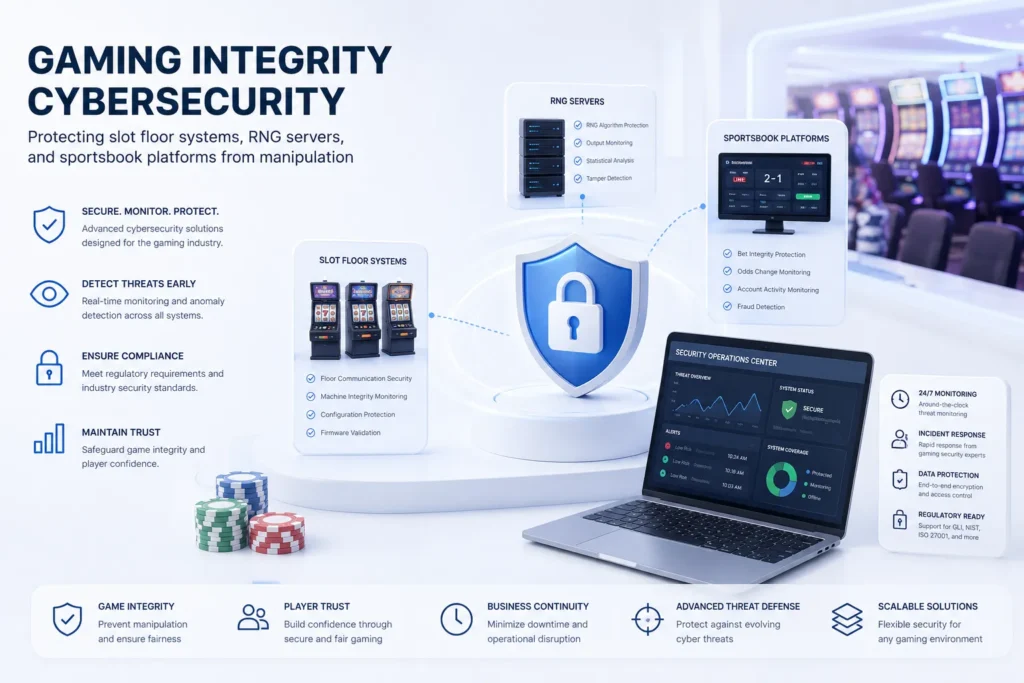
Slot floor management systems control the configuration, monitoring, and reporting of slot machines across a casino floor. They set denomination parameters, manage jackpot thresholds, control progressive jackpot pools, and generate the audit trails that regulators use to verify machine integrity. Unauthorized access to a slot management system could allow modification of jackpot parameters, enabling coordinated withdrawal of jackpot funds, or alteration of audit records to conceal prior manipulation.
Access to slot management systems is typically restricted to a small number of privileged users with technical roles. The insider threat is significant: a technician with legitimate access who understands the system well enough to make undetected modifications is a risk that perimeter security controls cannot address. Privileged access management, with session recording and anomaly detection on privileged activity, is the control that addresses this exposure.
RNG Servers and Certification
Random number generators are the mathematical foundation of slot game fairness and online gaming outcomes. Gaming regulators require that RNG implementations be certified by approved testing laboratories and that the certified configuration be maintained without unauthorized modification. An attacker who can modify RNG seed values, algorithm parameters, or the software layer between the RNG and game presentation can predictably influence outcomes.
RNG server environments require the same rigorous access controls, change management procedures, and integrity monitoring as any other critical financial system. Change control procedures that require multi-party approval for any modification to RNG systems, combined with file integrity monitoring that detects unauthorized changes, protect the certified configuration that the operator’s gaming licence depends on.
Table Game Management and Surveillance Integration
Table game management systems record betting patterns, game results, and player activity in formats that support regulatory audit and AML reporting. Surveillance systems provide the video record that corroborates table game data. The integrity of both depends on preventing unauthorized modification of records after the fact.
Collusion between a table game manager with access to management systems and an external attacker, or between a surveillance operator and accomplices on the gaming floor, represents the insider-external combined attack pattern that the most significant table game integrity incidents have involved. Segregation of duties between those who operate games, record results, and review surveillance provides a structural control against this pattern.
Sportsbook Odds and Line Management
Sportsbook operations set odds and lines for sporting events, manage betting limits, and process wagers in real time. The financial impact of a manipulated odds line, particularly on a high-volume event, can be immediate and large. An attacker with access to odds management systems who can adjust lines before a bet is placed by an accomplice, or who can delay line adjustments to allow arbitrage after the fact, has access to a reliable profit mechanism.
Sportsbook integrity attacks frequently combine insider access with external betting coordination. Exploiting a manipulated line profitably requires knowing both how to access the system and how to place bets that realize the advantage without triggering suspicious betting detection. The cybersecurity controls that protect sportsbook systems must work alongside the suspicious betting monitoring that sportsbook integrity programmes rely on.
What Do US and Canadian Gaming Regulators Require for System Security?
Gaming authorities in both Canada and the United States require documented controls over gaming system access, change management, and audit logging as conditions of the operating licence. The specific gaming authority technical standards vary by jurisdiction, but the common expectations are consistent.
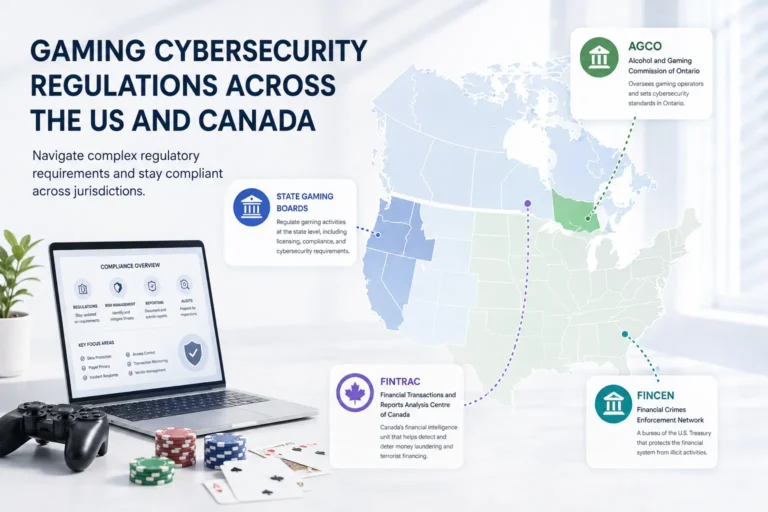
In Canada, AGCO technical standards for gaming platforms specify requirements for system access controls, audit trail integrity, change management procedures, and incident response for gaming system events. Provincial gaming authorities conducting compliance reviews assess whether these controls are documented, implemented, and operating as described. The AGCO has specifically addressed cybersecurity in its standards for registered iGaming operators, with requirements that include security testing of gaming platforms.
In the US, state gaming control boards set technical standards for gaming system security as part of the technical requirements that systems must meet before approval for use on the gaming floor or online. Nevada, New Jersey, and Pennsylvania all have published technical standards that address system security, access controls, and audit trail requirements. Penetration testing of gaming systems is referenced in technical guidance from several state gaming control boards, and regulators increasingly expect to see evidence of independent security testing as part of ongoing compliance.
How Does Penetration Testing Apply to Gaming Systems?
Penetration testing of gaming systems addresses the specific threat models that gaming integrity attacks represent. Testing covers the authentication and authorization controls on slot management, RNG, and sportsbook systems; the network segmentation between gaming systems and corporate IT infrastructure; the change management controls that protect gaming system configurations; and the API connections to external game providers, payment processors, and KYC platforms.
Gaming system penetration testing must be conducted within agreed constraints that protect live operations. Testing that could affect jackpot parameters, game outcomes, or payment processing on an active gaming floor requires precise scoping and coordination with operational teams. Many test activities are conducted against isolated or staging environments that replicate production configurations without touching live systems.
Armour Cybersecurity conducts gaming system penetration testing with testers who understand both the technical architecture of gaming platforms and the regulatory context in which findings will be assessed. Test reports are structured to map findings to gaming authority technical standards alongside standard vulnerability classifications, producing evidence that is useful for both security remediation and regulatory compliance, part of the gaming cybersecurity services Armour delivers to licensed operators.
What Is the Role of Insider Threat Controls?
The most significant gaming integrity incidents have involved insiders: employees with legitimate access to gaming systems who used that access in unauthorized ways, often in coordination with external accomplices. Standard cybersecurity controls that focus on external threats do not adequately address the insider risk in gaming environments.
Privileged access management, with just-in-time access provisioning, session recording for privileged activity, and anomaly detection on privileged user behaviour, addresses the insider threat at the technical level. Segregation of duties, where no single individual can both access gaming system configurations and approve changes to them, provides a structural control. Behavioural monitoring that flags access patterns inconsistent with job function provides the detection layer that identifies anomalous activity before it becomes a confirmed incident.
Across the 260+ organizations Armour Cybersecurity protects in 52+ industries, the gaming operators who never face an integrity scandal are not the ones who trust their technicians least; they are the ones who built the systems so trust is not the control. No single person can change an RNG configuration or a jackpot threshold and also approve that change, every privileged session on a gaming system is recorded, and access patterns that do not match a job function raise a flag the same day, so an integrity problem is caught as an anomaly rather than discovered as a headline.
Frequently Asked Questions
Are gaming integrity attacks more common in land-based or online environments?
Both environments face integrity risks, but the attack patterns differ. Land-based casinos face higher insider risk because gaming floor systems require on-site technical access and the most significant attacks have involved privileged insiders. Online gaming platforms face higher external attack risk because their systems are internet-accessible and the attack surface is broader. The controls required differ accordingly, though privileged access management and audit trail integrity are foundational in both environments.
What happens if a gaming regulator discovers an integrity control gap during an audit?
The response depends on the severity and nature of the gap. Documentation gaps and control weaknesses that represent risk but have not resulted in actual integrity events typically generate audit findings with remediation timelines. Confirmed integrity events, where unauthorized system access or modification is established, trigger formal investigations with potential licence conditions, financial penalties, or licence suspension depending on the jurisdiction and the severity of the incident. Self-reporting of discovered gaps, before a regulatory audit, is treated more favourably in most jurisdictions than gaps discovered during examination.
How do we demonstrate gaming system security to a regulator without exposing our controls?
Gaming regulators routinely receive confidential technical information about gaming system security as part of licensing and compliance processes. The documentation provided for regulatory review is treated as confidential and is not publicly disclosed. Penetration test reports, control documentation, and security assessment findings are submitted to gaming authority technical staff in the same way that financial information is submitted to financial regulators. Armour’s compliance audit service produces documentation structured for regulatory submission alongside the security programme itself.
How does gaming system security intersect with PCI DSS?
Gaming floor payment systems and iGaming deposit and withdrawal processing are typically within PCI DSS scope. The network segmentation required to reduce PCI DSS scope must be designed around the gaming network architecture, which includes gaming management systems, payment terminals, and cage systems that all require careful scoping. PCI DSS penetration testing requirements, including segmentation testing, apply to the payment infrastructure within the gaming environment. Armour conducts PCI DSS and gaming system penetration testing in coordinated engagements that address both sets of requirements efficiently.
The Bottom Line
Gaming integrity is where security and licensing become the same problem. The systems that decide outcomes, slot floor management, RNG servers, table game technology, and sportsbook odds, are what attackers aim at, and the most damaging attacks come from inside, from people who already have legitimate access. Regulators in every US and Canadian jurisdiction treat controls over these systems as a licensing condition, so a control gap is both a breach risk and a compliance failure. The operators who stay clear of integrity incidents engineered trust out of the equation: multi-party change control, recorded privileged sessions, segregation of duties, and independent penetration testing that regulators accept as evidence. Armour Cybersecurity helps casinos, iGaming operators, and lottery corporations build gaming cybersecurity services that protect gaming system integrity in line with US and Canadian regulatory requirements, so the systems that carry the operator’s licence are the ones the operator can prove are sound.
About the author
David Chernitzky is the CEO and Co-Founder of Armour Cybersecurity, a Toronto-based firm that protects organizations across North America from advanced cyber threats. He brings more than 25 years of cybersecurity and military cyber intelligence experience, having served as an officer in an elite technology unit before co-founding Armour. Armour’s team of military-intelligence veterans and senior advisors serves 260+ clients across 52+ industries with a 97% client retention rate. Learn more about Armour Cybersecurity.