QUICK ANSWER Third-party cyber risk management is the process of identifying, assessing, and continuously monitoring the security risks introduced by vendors, suppliers, and service providers. A program typically includes vendor risk assessments, risk scoring, contractual security requirements, and ongoing monitoring to prevent supply chain attacks. |
KEY TAKEAWAYS ☑ Vendors and suppliers are now one of the most common ways attackers reach your organization. ☑ Missing controls lead to higher premiums, lower limits, exclusions, or outright denial. ☑ Risk should be tied to how much data and system access each vendor has. ☑ Third-party risk is not one-and-done — vendors must be monitored over time. ☑ A structured program meaningfully reduces your supply chain exposure. |
Modern organizations rely heavily on vendors, suppliers, and service providers. Those partnerships drive efficiency and innovation — but they also introduce real cybersecurity risk.
Third-party cyber risk management is how you identify and manage the security risks that come from external vendors and partners, so a problem on their side doesn’t become a breach on yours.
Why Third-Party Cyber Risk Is Increasing
Supply chain cyberattacks are now one of the most significant threats organizations face. Attackers increasingly target vendors and service providers because one compromise can open the door to many organizations at once.
Most organizations grant third parties access to:
- Sensitive data
- Internal systems
- Cloud platforms
- Customer information
If a vendor is breached, every connected organization can be affected.
Common Third-Party Cyber Risks
Vendor relationships introduce several distinct types of risk.
Data exposure
Vendors often process or store your sensitive information. Weak controls on their side can expose that data through breaches or unauthorized access.
System access risks
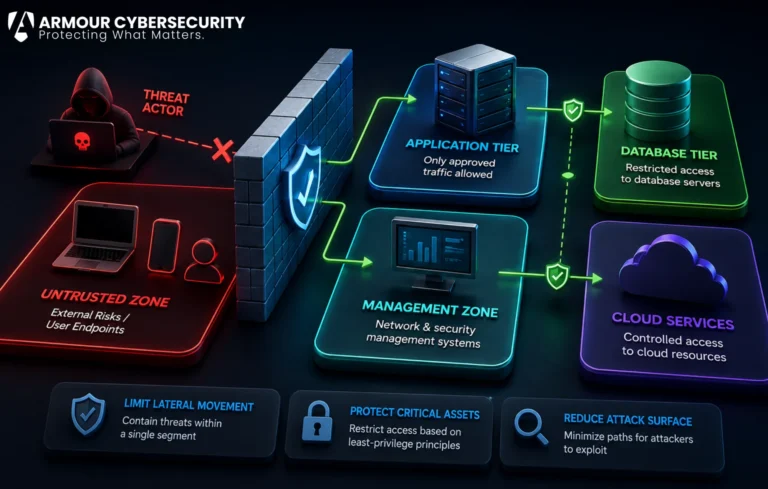
Many vendors need access to your internal systems or networks. Without proper access controls, attackers can exploit those connections to move into your environment.
Supply chain attacks
Attackers may compromise a software or technology provider and push malicious updates downstream — affecting thousands of organizations at once.
Key Components of Third-Party Risk Management
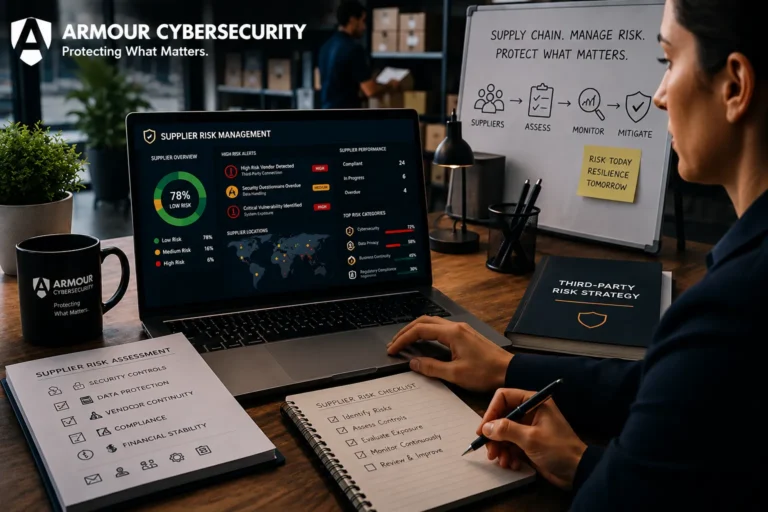
An effective program is built on four core components
SecVendor risk assessments
Evaluate a vendor’s security practices before you sign — typically through security questionnaires and documentation reviews — so you understand the risk before you take it on.
Risk scoring
Assign each vendor a risk rating based on factors like data access, system connectivity, starting with a cybersecurity posture assessment to establish baseline risk. and how critical they are to your operations. Scoring lets you focus attention where it matters.
Contractual security requirements
Build security obligations into your contracts — encryption requirements, required controls, and breach-notification timelines — so expectations are clear and enforceable.
Continuous monitoring
Third-party risk changes over time. Monitor vendors on an ongoing basis to catch emerging risks and security incidents, not just at onboarding or handled through managed security services.
How to Build a Third-Party Cyber Risk Program
You can stand up an effective program by following a clear sequence:
- Identify all third-party vendors, including the ones business units brought on without IT.
- Categorize vendors by risk level, based on data and system access.
- Conduct security assessments, prioritizing your highest-risk vendors first including penetration testing services for vendors with deep system access.
- Implement continuous monitoring so risk is tracked over time.
- Establish remediation procedures for when a vendor falls short or is breached.
This structured approach steadily reduces your supply chain vulnerabilities.
Frequently Asked Questions
What is third-party cyber risk management?
It’s the practice of identifying, assessing, and monitoring the cybersecurity risks introduced by vendors, suppliers, and service providers — so a weakness on their side doesn’t become a breach on yours. It usually covers vendor assessments, risk scoring, contract requirements, and continuous monitoring.
Why is supply chain cyber risk increasing?
Attackers target vendors because one compromise can reach many connected organizations at once. As businesses give more vendors access to data, systems, and cloud platforms, the potential blast radius of a single vendor breach grows.
What should a vendor risk assessment include?
At minimum, a review of the vendor’s security controls, data handling, access requirements, certifications (like SOC 2 or ISO 27001), and breach history — usually gathered through a security questionnaire and supporting documentation.
How do you score vendor risk?
Score each vendor on factors such as the sensitivity of data they handle, their level of system or network access, and how critical they are to operations. The score determines how closely you assess and monitor them.
How often should vendors be reviewed?
High-risk vendors should be reviewed at least annually and monitored continuously. Lower-risk vendors can be reviewed on a longer cycle. Any major incident or contract change should trigger a fresh review.
What contract clauses reduce third-party risk?
Useful clauses include required security controls, encryption standards, breach-notification timelines, audit or assessment rights, and clear data-handling and data-return obligations when the relationship ends.
Reduce Third-Party Risk with Armour
Third-party cyber risk management is essential for protecting today’s connected business. Organizations that proactively assess and monitor vendor security are far better positioned to prevent supply chain attacks.
Vendor risk assessments and risk scoring tailored to your business
Contractual security requirements and onboarding workflows
Continuous monitoring to catch vendor risk as it emerges
Armour Cybersecurity helps organizations design and run supplier risk management programs that identify vulnerabilities, strengthen vendor oversight, and reduce third-party cyber risk.
Build Your Vendor Risk Program →
Armour Cybersecurity is a full-service Managed Security Services Provider (MSSP) helping small and
mid-sized businesses across North America and Latin America build stronger, simpler security — in English
and Spanish.