By David Chernitzky, CEO, Armour Cybersecurity · Serving organizations across North America · Last updated August 11, 2026
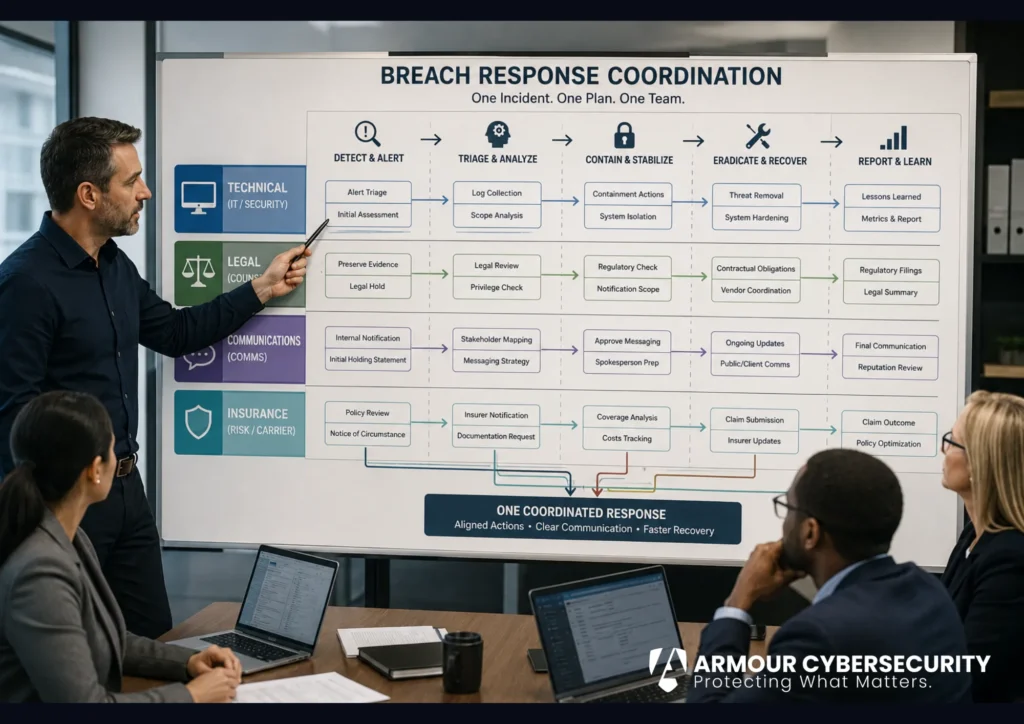
| Quick Answer A serious cyber incident activates at least four simultaneous workstreams: technical response, legal and privacy counsel, cyber insurance carrier engagement, and communications. Each has its own experts, priorities, and outputs. Without someone coordinating them, they produce contradictory results. A breach coach is the connective tissue that keeps these workstreams aligned, ensures the outputs of one inform the decisions of the others, and prevents the most common multi-workstream failure modes. |
Key Takeaways
- The most damaging failures in serious cyber incidents are not technical failures. They are coordination failures between workstreams that are each doing their job correctly but not talking to each other.
- Technical findings must inform legal strategy before notification decisions are made. Legal strategy must inform communications before any external statement. Carrier engagement must be coordinated with both. These dependencies are not automatic.
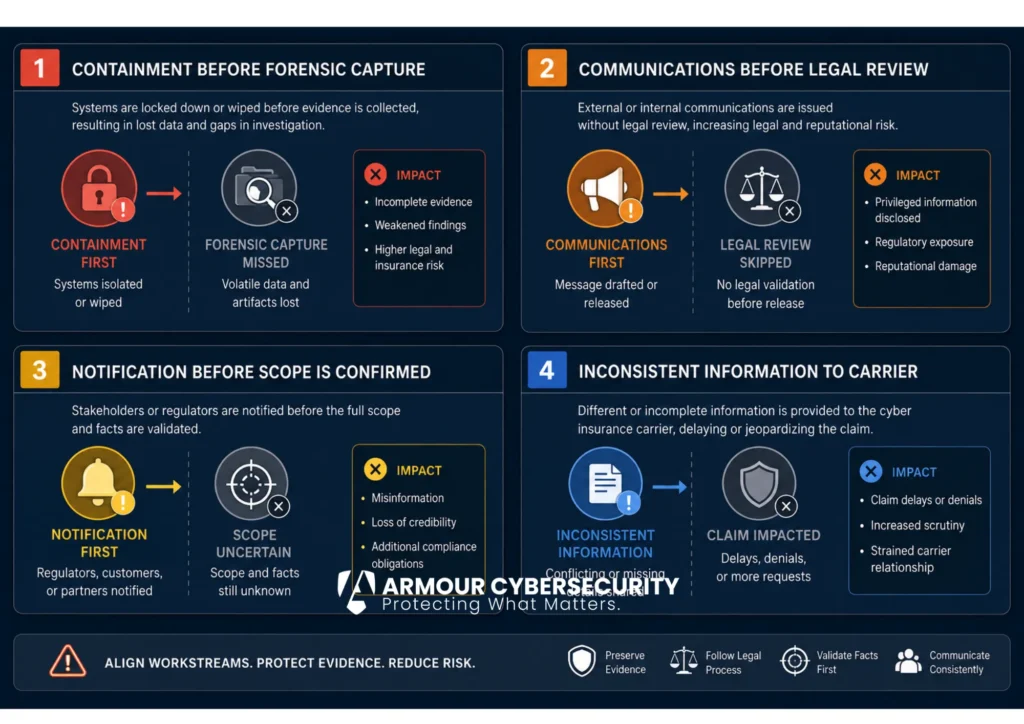
- Communications released before legal review, technical actions taken before forensic preservation, and carrier notifications inconsistent with the investigation are all workstream misalignment failures.
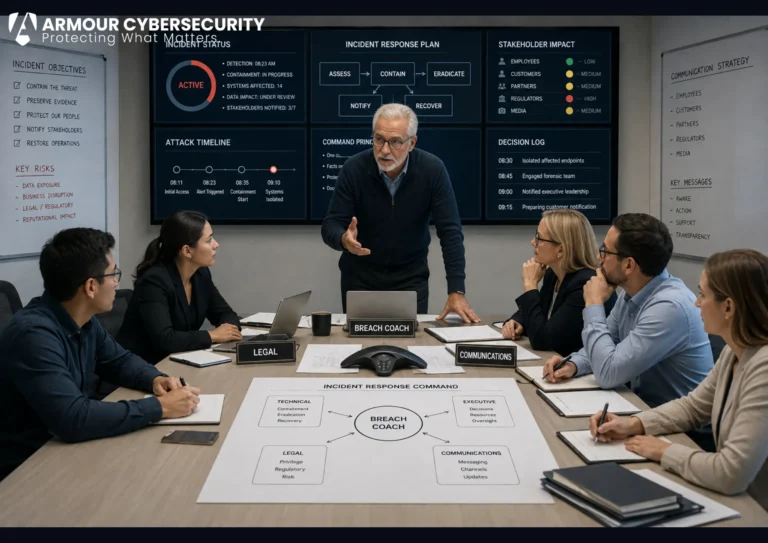
- The breach coach role is designed to manage these dependencies: establishing a coordination cadence, translating between workstreams, and sequencing decisions so each workstream has the inputs it needs.
- A daily situation report that synthesizes all workstream inputs into a single coherent picture for executive leadership is one of the most practical tools the breach coach provides.
Cyber breach workstream coordination is the difference between four expert teams and one coherent response. When a serious breach hits, the incident response team, breach counsel, the insurer, and communications all activate at once, each doing its job well and each seeing only its own slice. The damage that follows is rarely a technical failure. It is the gaps between the lanes: the containment that destroys evidence, the statement that outruns the legal review, the notification that goes out before the scope is known. Closing those gaps is the breach coach’s job.
| By the NumbersCoordination is the cost variable. The global average breach cost $4.44M ($10.22M in the US); once an incident is live, whether the workstreams stay aligned moves that number more than any single tool. Source: IBM Cost of a Data Breach Report 2025.A practiced plan pays. IBM 2025 finds organizations with a tested incident response capability incur materially lower breach costs; the coach is what runs that plan in real time.Evidence has a shelf life. Memory, network state, and process tables vanish the moment a system is rebooted or isolated, which is exactly why the capture-versus-contain sequence has to be coordinated, not improvised. |
Why Do Cyber Incident Workstreams Misalign?
Each workstream in a serious incident is staffed by specialists focused on their area: the forensic team on the technical investigation, breach counsel on the legal and regulatory analysis, communications on messaging, and the carrier on claim documentation. These specialists are doing exactly what they should. The misalignment problem is not a competence problem, it is a structural one: without deliberate coordination, each workstream operates on the information it has from its own angle, which is incomplete.
Across the 260+ organizations Armour serves in 52+ industries, the incidents that spiral are rarely the ones with the most sophisticated attacker. They are the ones where four competent teams each did their job in isolation: the responders contained before forensics captured, communications spoke before counsel reviewed, the carrier heard one version while the investigation documented another, and by the time anyone noticed the tracks had diverged, much of the damage was self-inflicted. None of it was a failure of expertise. All of it was a failure of coordination, which is the one thing no single workstream owns.
The Most Common Workstream Misalignment Failures
Technical action before forensic preservation
The most time-sensitive forensic preservation requirement is capturing evidence from live systems before they are shut down, isolated, or reimaged. Memory, network connection states, and process tables that exist on a running compromised system are lost permanently when it is rebooted or isolated. The response team’s instinct is to contain first, correct from a spread-limitation view. The forensic requirement is to capture first, correct from an evidence view. Without coordination, the response team acts on its instinct and destroys evidence that counsel and the carrier will need.
Communications released before legal review
The pressure on communications during an incident is to say something quickly: customers are asking, media is reaching out. Counsel’s instinct is to say nothing that cannot be confirmed and to preserve options. Uncoordinated, communications releases a statement counsel would have revised, and that statement creates legal exposure to manage on top of everything else. A breach coach with working relationships in both lanes holds communications to the legal-review sequence without the adversarial dynamic that can develop between legal and communications under pressure.
Notification decisions made before forensic scope is established
Regulatory notification depends on knowing what data was affected and who was impacted. Under PIPEDA and other frameworks, the obligation is triggered when the breach creates a real risk of significant harm to identifiable individuals, and assessing that trigger requires the scope. Decided before the investigation establishes scope, a notification may overstate the impact (unnecessary regulatory burden) or understate it (a later amended notification that raises questions about the original’s accuracy). The coach coordinates the notification timing with the investigation so the legal analysis rests on confirmed findings, not preliminary assessments.
Inconsistent information reaching the carrier
The cyber insurance carrier receives information from several sources during an incident: the initial notification, forensic updates, counsel briefings, and public communications. When these are inconsistent, the claims investigation is complicated and the organization’s credibility in the process weakens. The coach manages carrier engagement as a coordinated function, so what the carrier receives stays consistent with the forensic findings and the legal analysis at each stage.
How Does the Breach Coach Create Coordination?
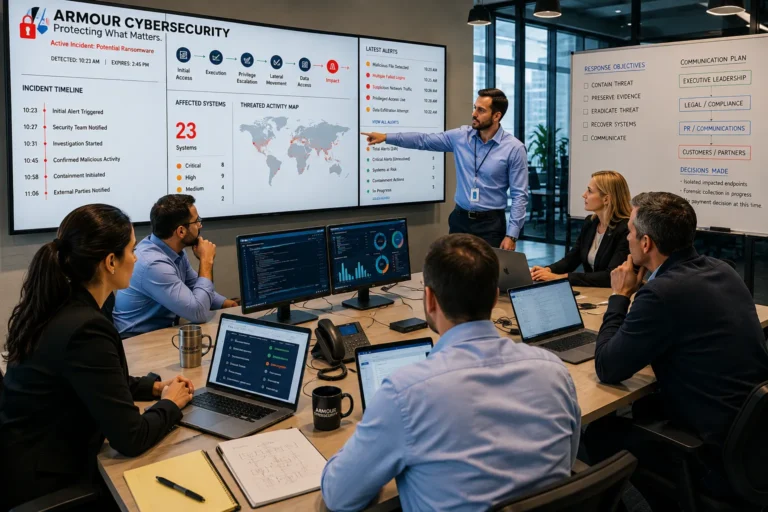
The coach establishes a coordination cadence from the first hour. A daily standing session with workstream leads creates a regular touchpoint where each workstream’s findings are shared, dependencies are identified, and the sequencing of upcoming decisions is confirmed. It does not need to be long: a thirty-minute daily call covering current status, pending decisions, and cross-workstream dependencies is often enough to prevent the drift that creates misalignment.
The coach also serves as the translator between workstreams. Technical findings need to be rendered in legal terms for counsel to assess notification triggers. Legal analysis needs to be translated into operational guidance for the technical team. Communications messaging needs to be checked for technical accuracy before release. Performing that translation reduces the friction that arises when specialist workstreams have to communicate across different professional languages.
The daily situation report is one of the most practical tools the coach provides. Produced each day of the active incident, it synthesizes every workstream’s current status into a single document for executive leadership: where things stand technically, where the legal analysis is, what the carrier has been told and their current position, what has been released or is pending in communications, and what decisions leadership needs to make in the next 24 hours. That synthesis is what prevents leadership from receiving five separate reports and having to reconcile them without the expertise to do it accurately. Armour’s breach coach service provides this coordination for the duration of the active incident, from first engagement through the post-incident debrief.
Where This Fits in Armour’s Managed Services
Workstream coordination is one pillar of Armour’s managed cybersecurity services, alongside the explainer on what a breach coach is, the piece on why a CEO should not face a breach alone, and the managed Security Operations Center whose telemetry feeds the technical lane. The specialists own their lanes. The coach owns the space between them.
The Bottom Line
In a serious incident, the teams are rarely the problem; the space between them is. Containment that beats forensics, a statement that beats the legal review, a notification that beats the scope, each is a competent team acting alone. A breach coach owns that space, keeping four workstreams pointed at one strategy. Armour’s breach coach service provides that coordination from the first hour through the debrief, on retainer before an incident or on emergency activation during one.
Frequently Asked Questions
What is cyber breach workstream coordination?
Cyber breach workstream coordination is the deliberate management of the separate teams that activate in a serious incident, technical response, legal and privacy counsel, cyber insurance carrier engagement, and communications, so their outputs stay consistent and their decisions stay sequenced. Left uncoordinated, each team acts on its own partial view: responders contain before forensics captures, communications speaks before counsel reviews, notifications go out before scope is confirmed. Coordination is the breach coach’s core function: a daily cadence, translation between the workstreams, and one synthesized picture for leadership, so four competent teams add up to one coherent response instead of four conflicting ones.
What is legal privilege and how does it affect incident response coordination?
Legal privilege protects communications between a client and their legal counsel from disclosure in legal proceedings. In a cyber incident, privilege can extend to forensic investigation reports and other documentation if those are created at the direction of counsel for the purpose of obtaining legal advice. Managing privilege during an incident, decisions about what to commit to writing, how to structure communications with the forensic team, and what to share with the carrier, is a coordination challenge that requires the breach coach and counsel to work closely. Creating documents that should be privileged outside the privileged channel is a common coordination failure the coach helps prevent.
How does the breach coach handle disagreements between workstreams?
Workstream disagreements during an incident are normal and expected: technical and legal may disagree about timing, communications and legal about content, the forensic team and carrier panel about methodology. The coach’s role is not to impose a resolution but to ensure the right parties are involved, that the decision is made with the right information from each workstream, and that the resolution is implemented consistently. Where a disagreement cannot be resolved at the coach level, it is escalated to the executive decision-maker with a clear presentation of the options and trade-offs.
How does coordination work when the carrier provides its own panel forensic team?
When the carrier provides forensic responders from their panel, the coordination structure includes the carrier’s forensic team, the organization’s internal IT team, and potentially the breach coach’s own technical colleagues. The coach coordinates this multi-team response by establishing clear roles, communication channels, and escalation paths, so the teams are aligned on priorities and methodology and the forensic outputs reach counsel in a format that supports the legal analysis. Managing that interface is what prevents the dual-authority problems that arise when multiple technical teams work the same environment.
What happens to the coordination structure after the incident is contained?
As the incident moves from active response to recovery and then to post-incident review, the coordination structure scales down proportionally. Daily standing sessions become weekly check-ins, and the daily situation report becomes a weekly summary. The coach shifts from incident coordination to post-incident review: collecting observations from workstream leads, synthesizing the lessons learned, and preparing the strategic debrief with executive leadership, documenting what was handled well, what could improve, and the capability investments that would strengthen the response to future incidents.
Can the breach coach coordinate with external PR support during a public-facing incident?
Yes. For incidents that generate significant public attention, a PR or communications firm may be engaged to manage media relations, monitoring, and public messaging. The breach coach coordinates with PR support as one of the communications workstream participants, ensuring PR messaging is consistent with the legal position, technically accurate, and aligned with the overall strategy. The coach reviews communications outputs before release and manages the sequencing of PR activities with the technical and legal workstreams.
About the Author
David Chernitzky is the CEO and Co-Founder of Armour Cybersecurity, a Toronto-based firm that protects organizations across North America from advanced cyber threats. He brings more than 25 years of cybersecurity and military cyber intelligence experience, having served as an officer in an elite technology unit before co-founding Armour. Armour’s team of military-intelligence veterans and senior advisors serves 260+ clients across 52+ industries with a 97% client retention rate.