

Armour Cybersecurity's advisory services provide expert-led guidance that helps businesses assess risk, achieve compliance, and build a resilient security posture. From board-level cybersecurity advisory and cyber strategy roadmap development to compliance readiness assessments for SOC 2, ISO 27001, and NIST CSF, our team delivers actionable recommendations tailored to your regulatory environment and business goals.
Our advisory practice covers the full governance, risk, and compliance (GRC) lifecycle — including cybersecurity posture assessments, privacy risk management, supplier risk evaluations, and cyber insurance advisory. Whether you are preparing for your first compliance audit or strengthening an existing security program, we turn complex cybersecurity requirements into a clear, practical plan.
Explore our latest advisory insights, compliance guides, and risk management resources below.
Our advisory practice covers the full governance, risk, and compliance (GRC) lifecycle — including cybersecurity posture assessments, privacy risk management, supplier risk evaluations, and cyber insurance advisory. Whether you are preparing for your first compliance audit or strengthening an existing security program, we turn complex cybersecurity requirements into a clear, practical plan.
Explore our latest advisory insights, compliance guides, and risk management resources below.
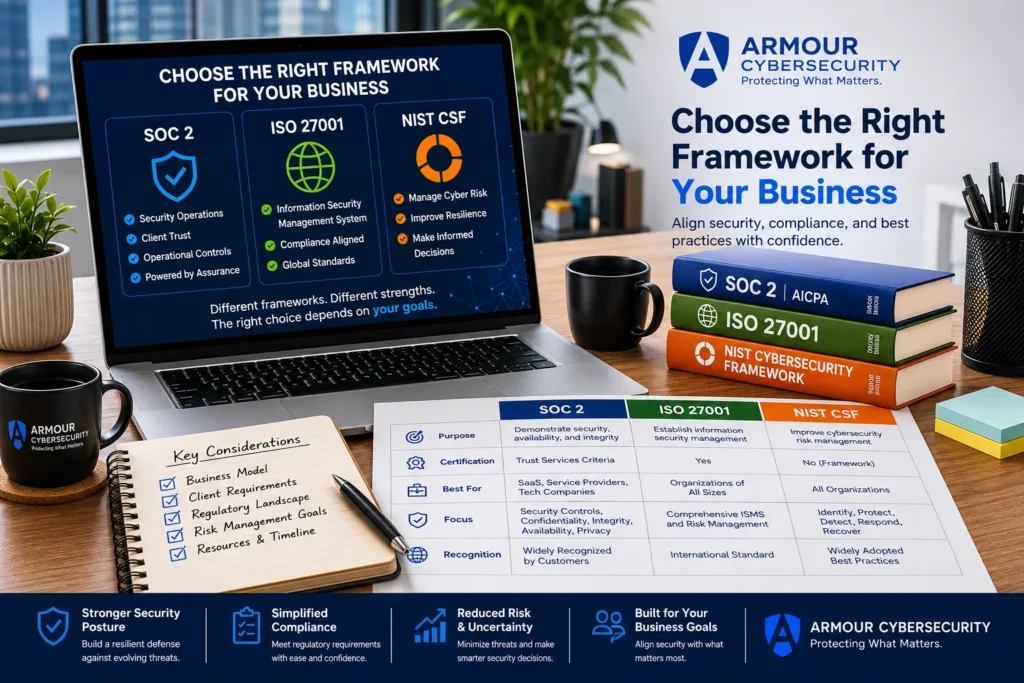
Canadian Compliance in 2026: SOC 2, ISO 27001, and NIST, Which Framework Fits Your Business?
SOC 2, ISO 27001, and NIST CSF solve different problems, and picking…
Read More...Highlights
Advisory services
Filters:
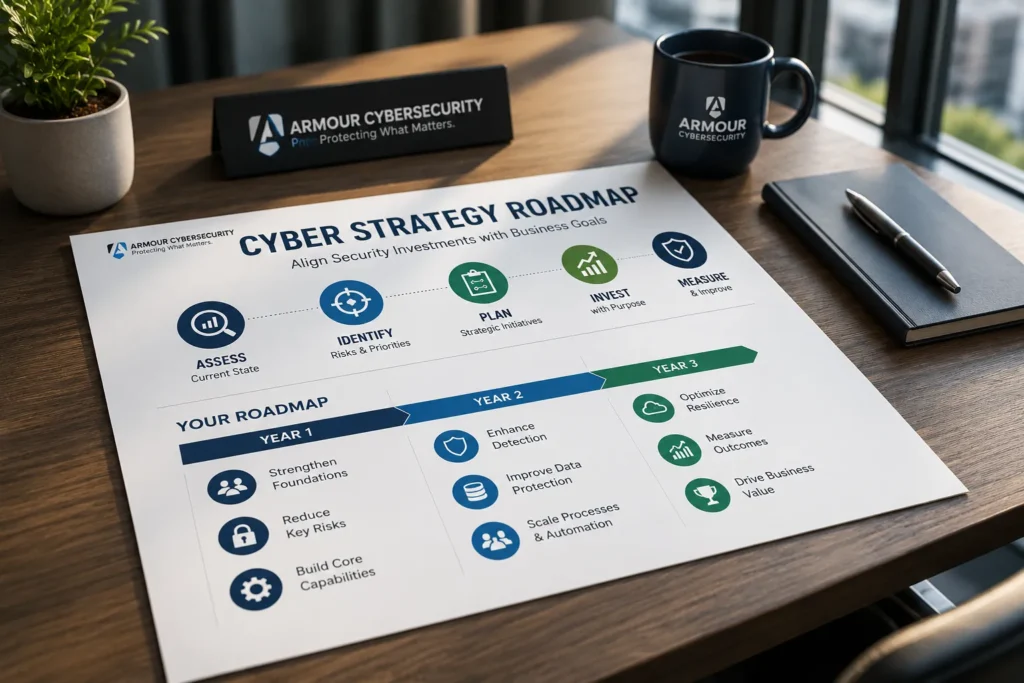
Cyber Strategy Roadmap Development: Turning Security Spending into Strategic Business Value
Jun 12, 2026
Discover how a cyber strategy roadmap helps organizations prioritize security investments, align cybersecurity initiatives with business objectives, and reduce long-term cyber risk....

Endpoint Security vs Antivirus: Understanding the Difference
Jun 11, 2026
Learn the differences between traditional antivirus software and modern endpoint security solutions, including EDR, behavioral analysis, threat intelligence, and automated response....

Top Cloud Security Risks Every Organization Should Know
Jun 11, 2026
Learn about the most common cloud security risks, including misconfigurations, IAM weaknesses, insecure APIs, monitoring gaps, and third-party vulnerabilities....

Privileged Access Management Best Practices
Jun 11, 2026
Learn how Privileged Access Management (PAM) helps organizations secure administrator accounts, enforce least privilege, implement MFA, and reduce cyber risk....
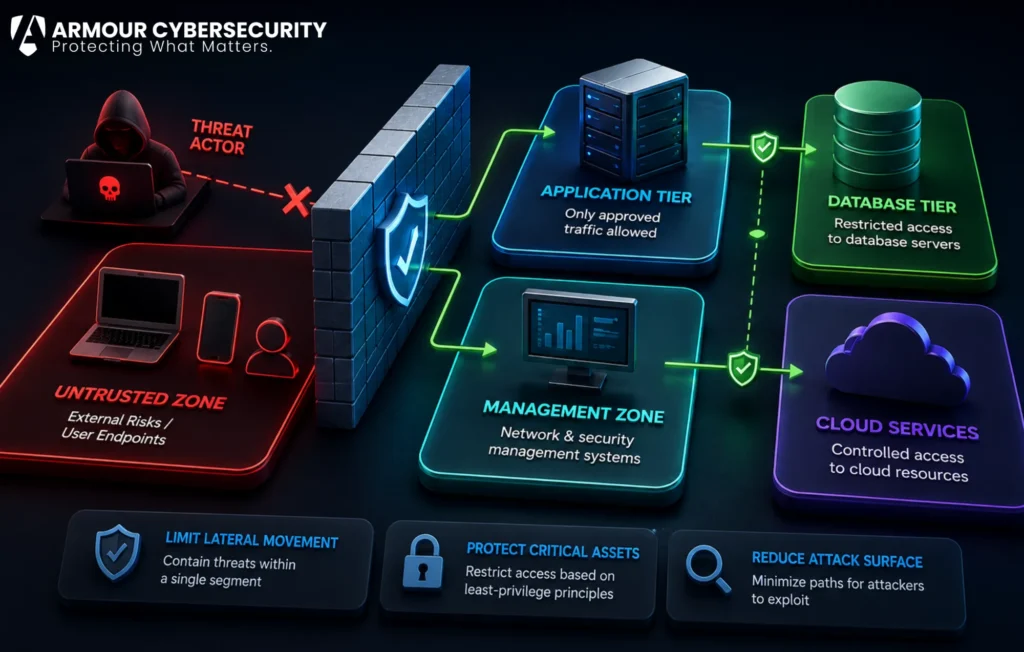
Network Segmentation: A Key Cybersecurity Strategy
Jun 11, 2026
Learn how network segmentation strengthens cybersecurity by isolating critical assets, limiting lateral movement, reducing attack surfaces, and enforcing secure communication between network zones....

What Is Penetration Testing and Why Is It Important?
Jun 11, 2026
Learn what penetration testing is, how ethical hackers identify exploitable vulnerabilities, and why regular pen testing is essential for modern cybersecurity programs....
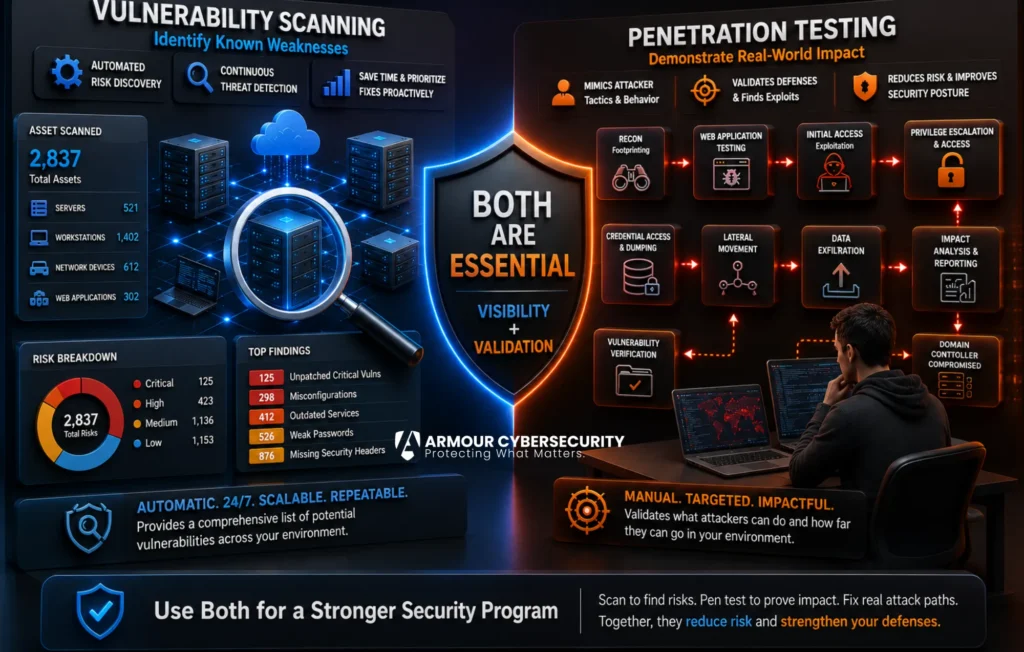
Vulnerability Scanning vs Penetration Testing: What’s the Difference?
Jun 10, 2026
Vulnerability scanning and penetration testing are often confused — but they serve very different purposes. Scanning gives you automated, continuous visibility into known weaknesses across your environment. Pen testing brings human adversarial thinking to prove how those weaknesses could actually be exploited. This guide breaks down the key differences and…...

Why Cybersecurity Is Now a Board-Level Responsibility
Jun 10, 2026
Cybersecurity is no longer just an IT concern — it's a boardroom priority. Discover how Armour Cybersecurity helps executives understand, govern, and act on cyber risk before it impacts the business....

What Is a Cybersecurity Posture Assessment? A Complete Guide
Jun 10, 2026
Vendors and suppliers are one of the most common ways attackers reach your organization. Learn how third-party cyber risk management works — vendor assessments, risk scoring, contractual requirements, and continuous monitoring — and how to build a vendor risk program that reduces your supply chain exposure....

Third-Party Cyber Risk Management Explained
Jun 10, 2026
Vendors and suppliers are one of the most common ways attackers reach your organization. Learn how third-party cyber risk management works — vendor assessments, risk scoring, contractual requirements, and continuous monitoring — and how to build a vendor risk program that reduces your supply chain exposure....